Historical archive
Tarmac Educational Services is now closed. This page preserves the company’s history, images, and role in educational technology.


In 1957 Jack McCracken, a former Principal from Buncombe County NC, founded Tarmac Audio Visual – the “Tar” comes from the Tarheel State North Carolina and the “Mac” comes from the McCracken family name. In the late fifties this seemed to be the thing to do. Our office for the first 35 years was at 71 North Market Street in Asheville NC, just across from the Thomas Wolfe House.
Jack believed that a well-trained teacher with good technology, when used appropriately, could have a much greater and positive effect on many more students than could a teacher alone. This philosophy continued through the life of the company. Beginning in the mid-sixties, Tarmac began concentrating on the use of projectors and audio tape programs to enhance reading skills. As technology changed, these programs grew into computer software.
Over the past six decades Tarmac represented countless publishers and manufacturers, as well as publishing and manufacturing its own educational programs, tools, and reading lab furniture.
We wish that Jack had lived long enough to see the most recent and fourth online version of Reading Plus. In those days, the ability to meet each student’s individual reading needs in each lesson was not even in our dreams.
During its 60 year history, Tarmac led technology suppliers by providing staff development and follow-up on all products distributed to schools. Support was enhanced to include onsite staff development, online staff development, and telephone, online, and onsite technical support.
Enhancing Education Through Technology
Tarmac was in the educational technology sales, marketing and training business beginning in 1957. There were constant and ever more rapid changes in educational technology.
The company followed the paradigm shift of educational technology for that time period. Its history reads like a book on ed-tech. Tarmac represented an uncountable number of publishers and manufacturers. It manufactured, printed and published educational materials and manufactured computer and reading lab furniture. In later years, the business represented software publishers as independent sales and marketing for specific areas.
For over 60 years Tarmac Educational Services helped educators implement programs that benefited students by providing individualized assessments and prescriptive educational plans.
The 50’s
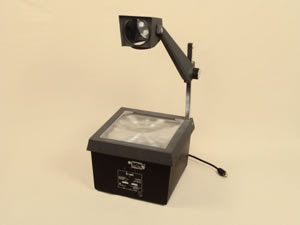
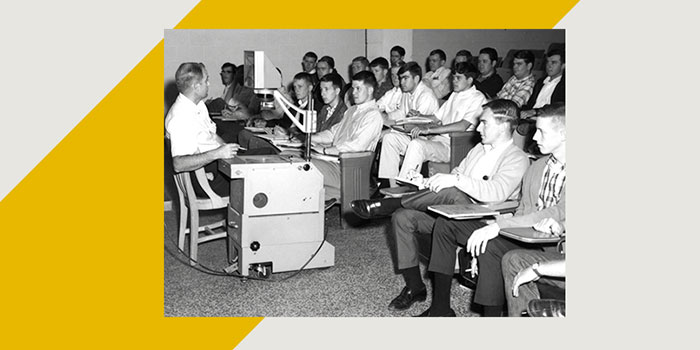
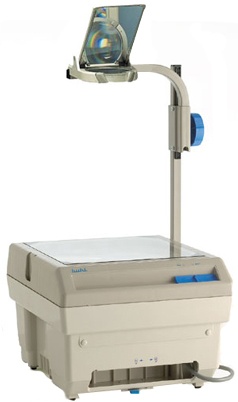
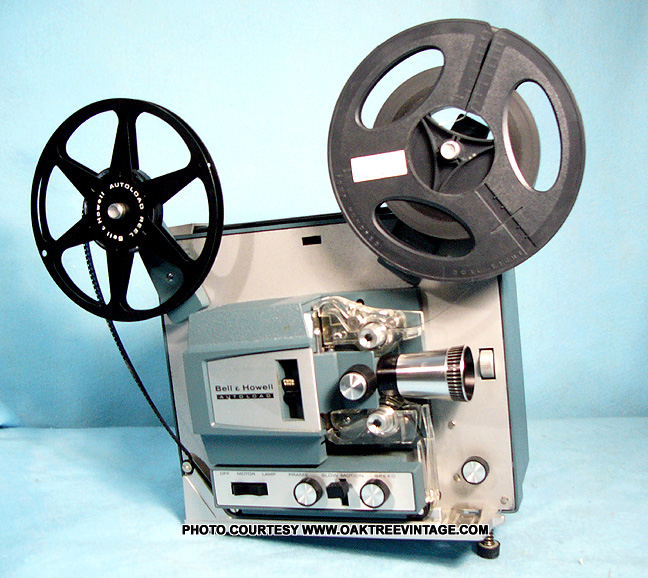
In 1957, Jack McCracken, a School Principal, founded TARMAC (derived from the ‘tar’ in Tarheel and the ‘Mac’ from McCracken), when he realized that technology had the potential of enhancing the teaching and learning process. He founded Tarmac Audio/Visual Company in Asheville North Carolina. With technology including overhead projectors, filmstrip projectors, and innovations being rapidly released, the need for additional targeted staff development was seen as critical. Tarmac began providing training on the use of technology and continued to be a leader in individualized instruction and staff development.
1960s
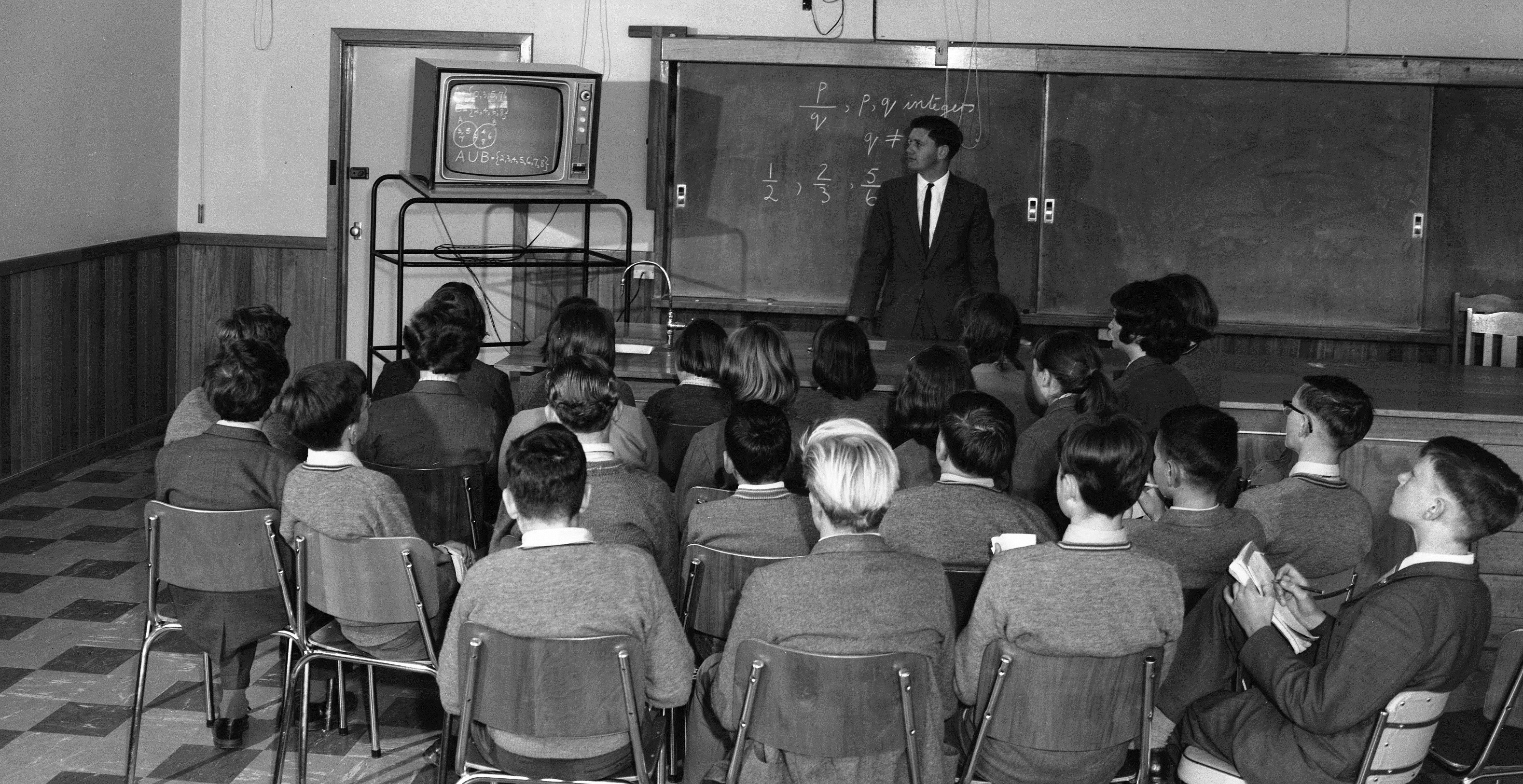
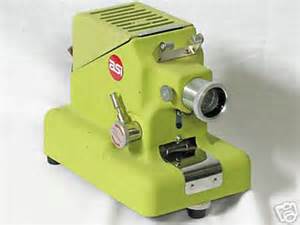
With the passage of federal funding through ESEA Title I and Title II, there were funds to purchase new and innovative tools to enhance education. Projectors with Basic Sight Word filmstrips and Sight Word filmstrips gave educators new options. For silent fluency development, filmstrips were developed that moved the print left to right. Tarmac offered classes on the proper usage of overhead projectors.
1970s -80s
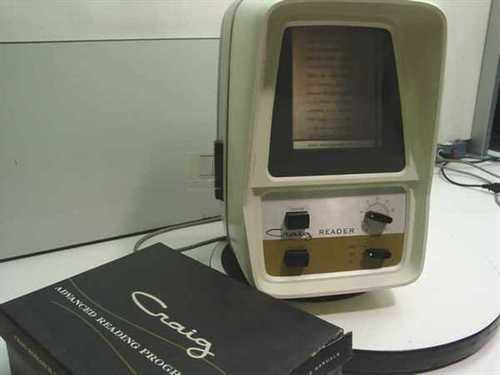
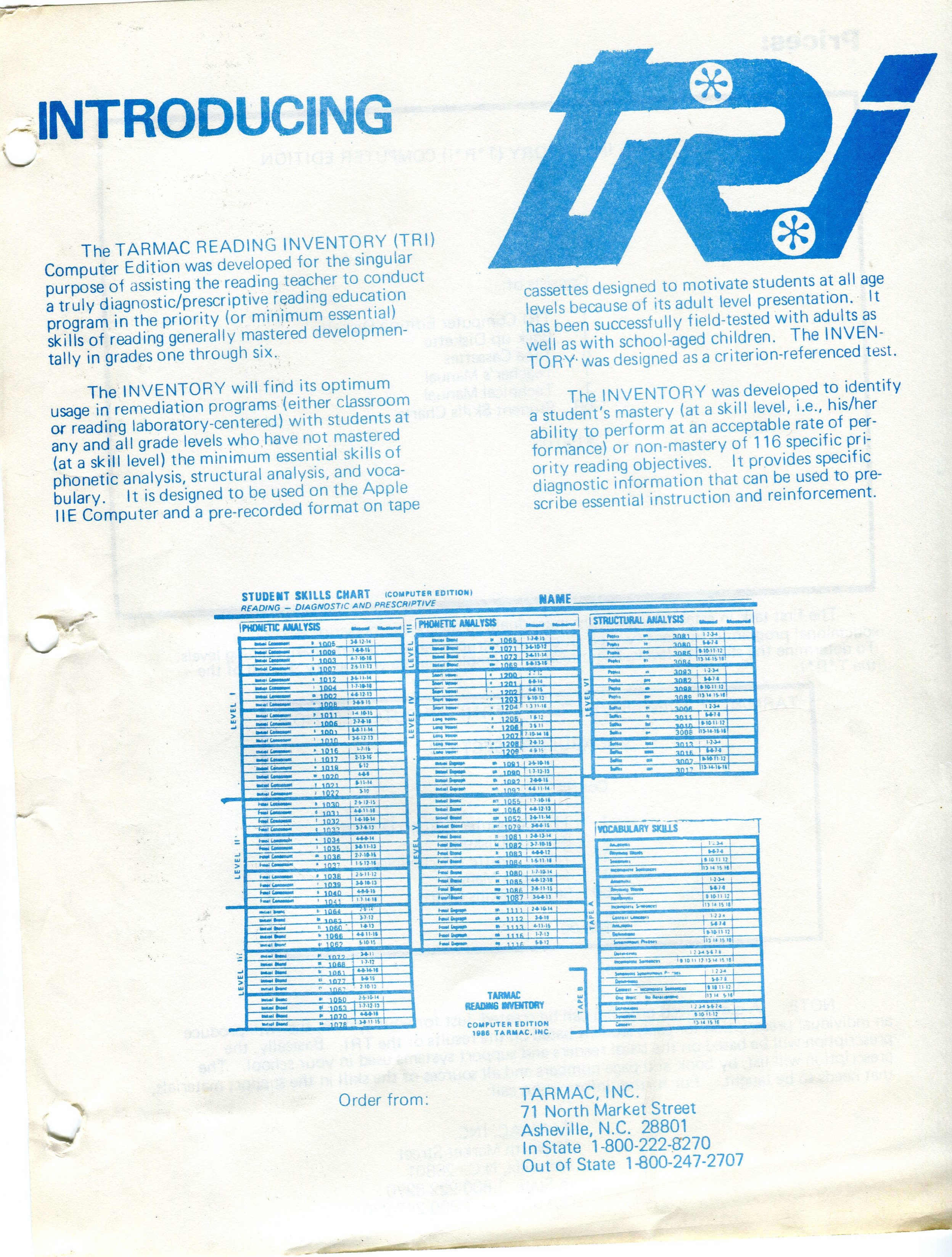
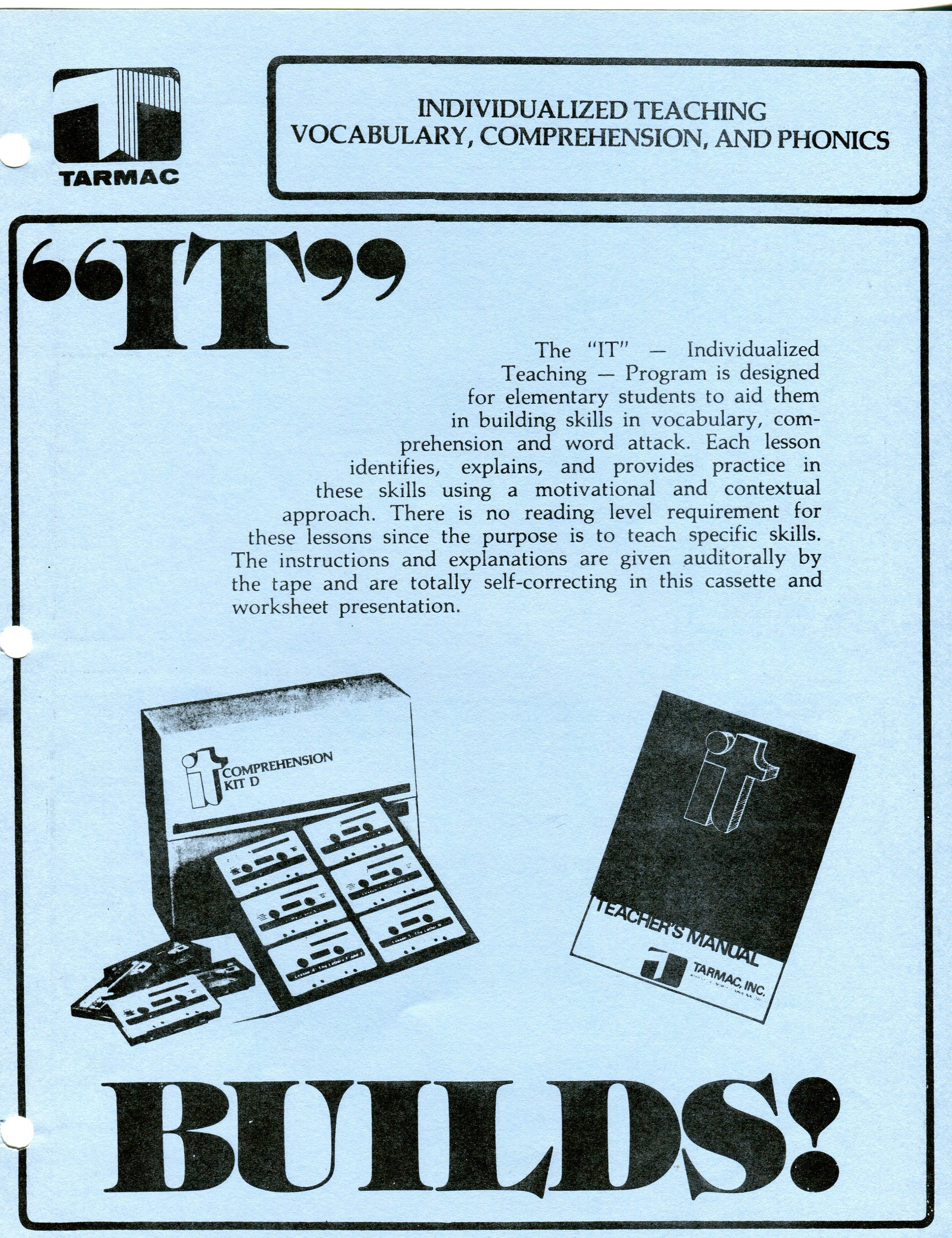
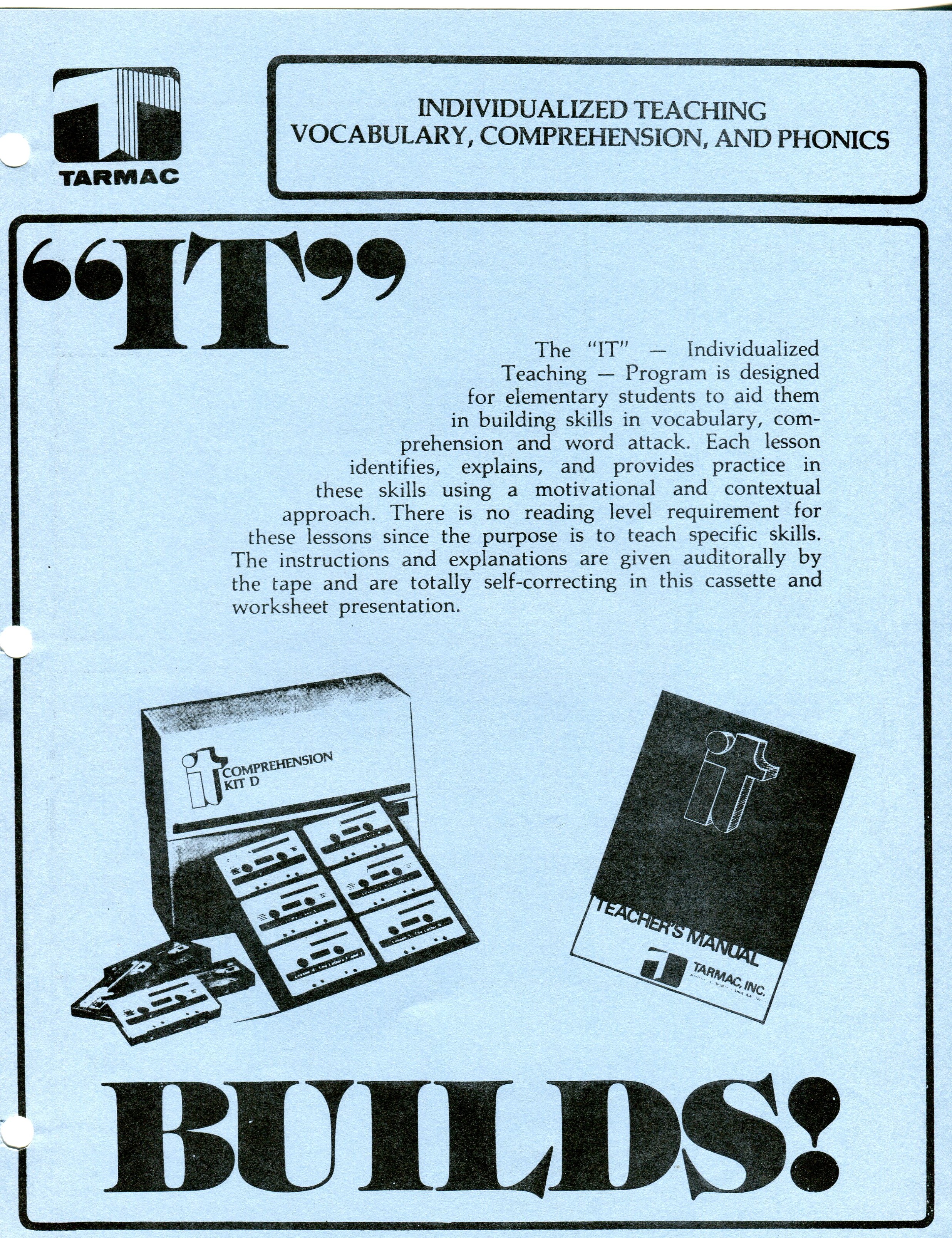
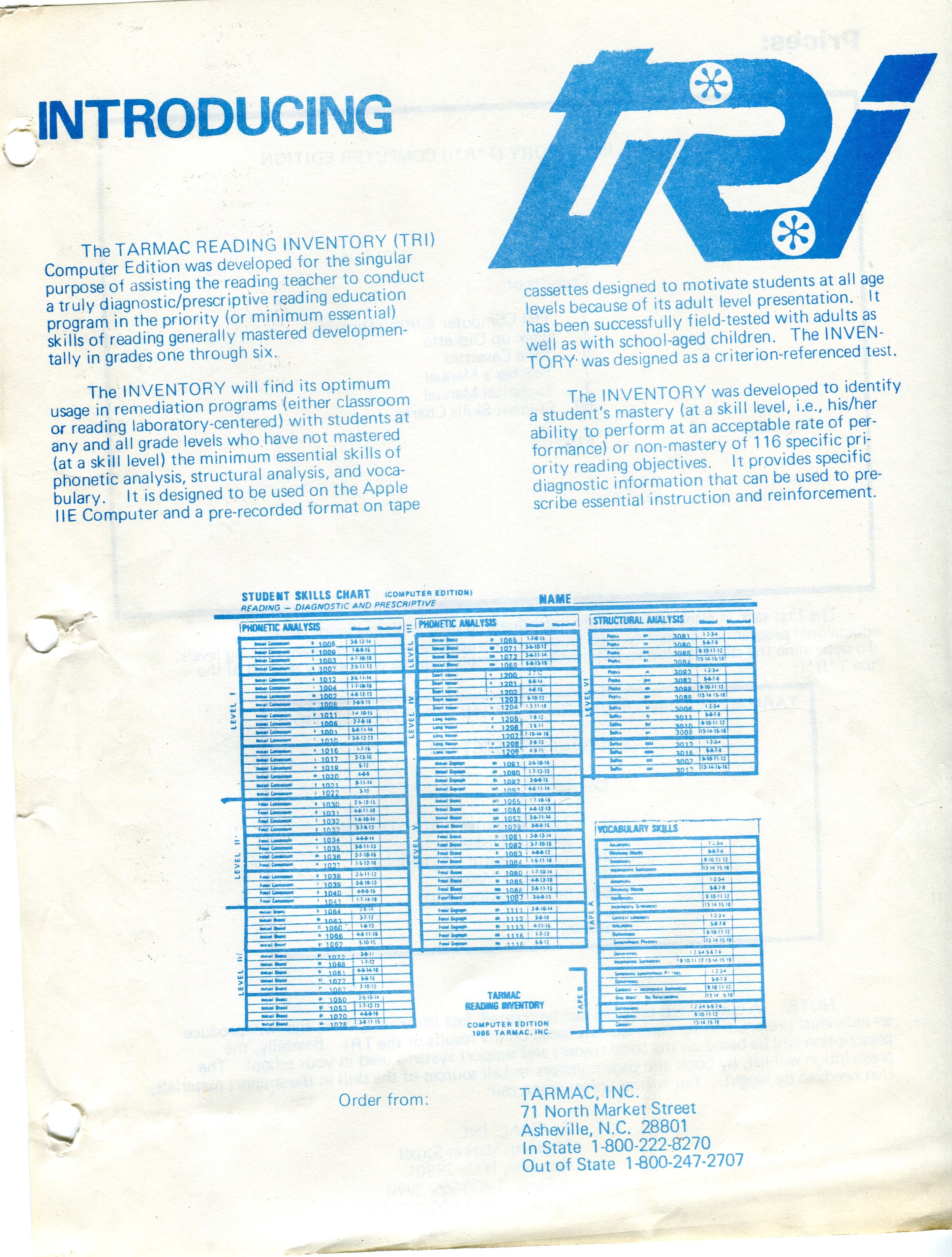
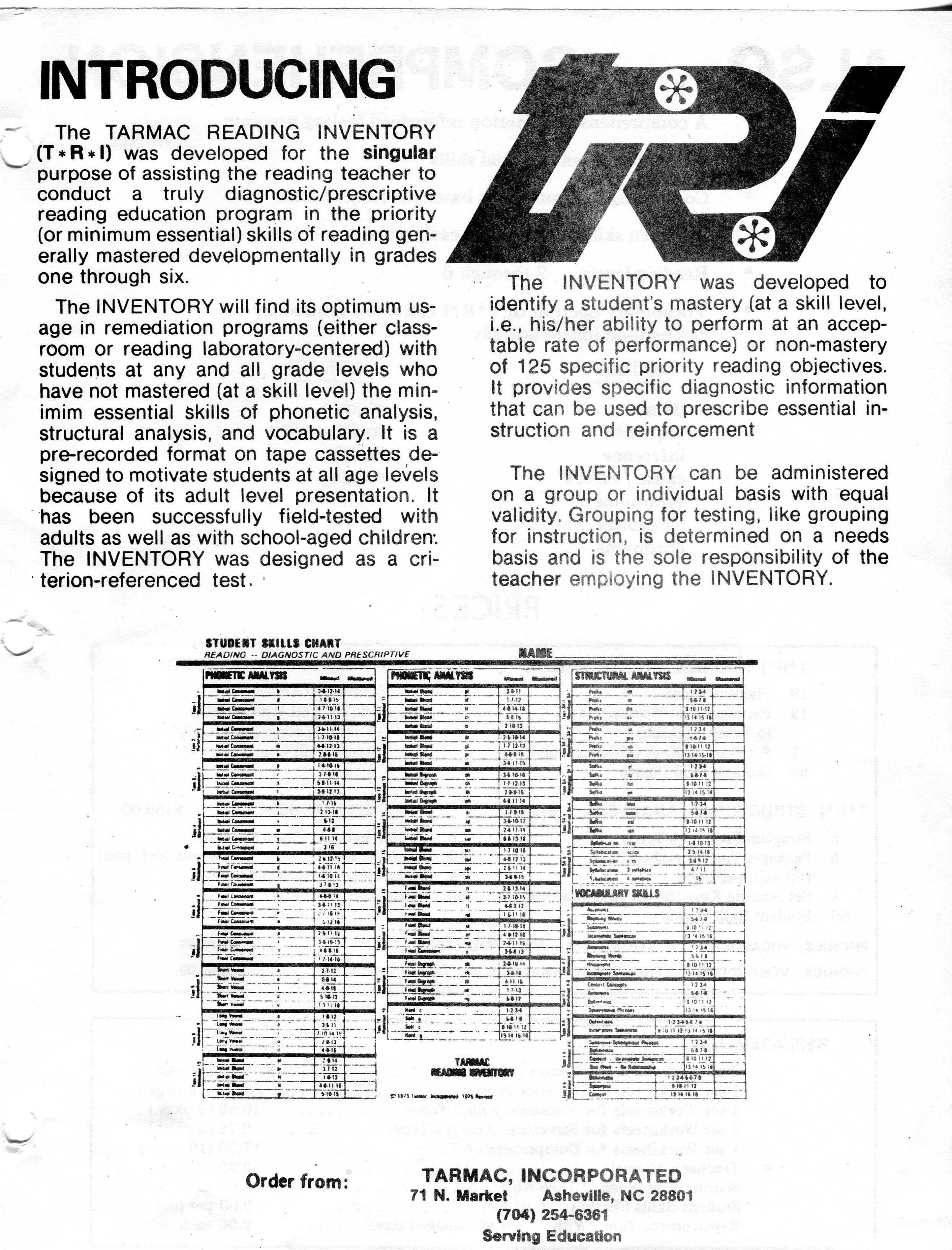
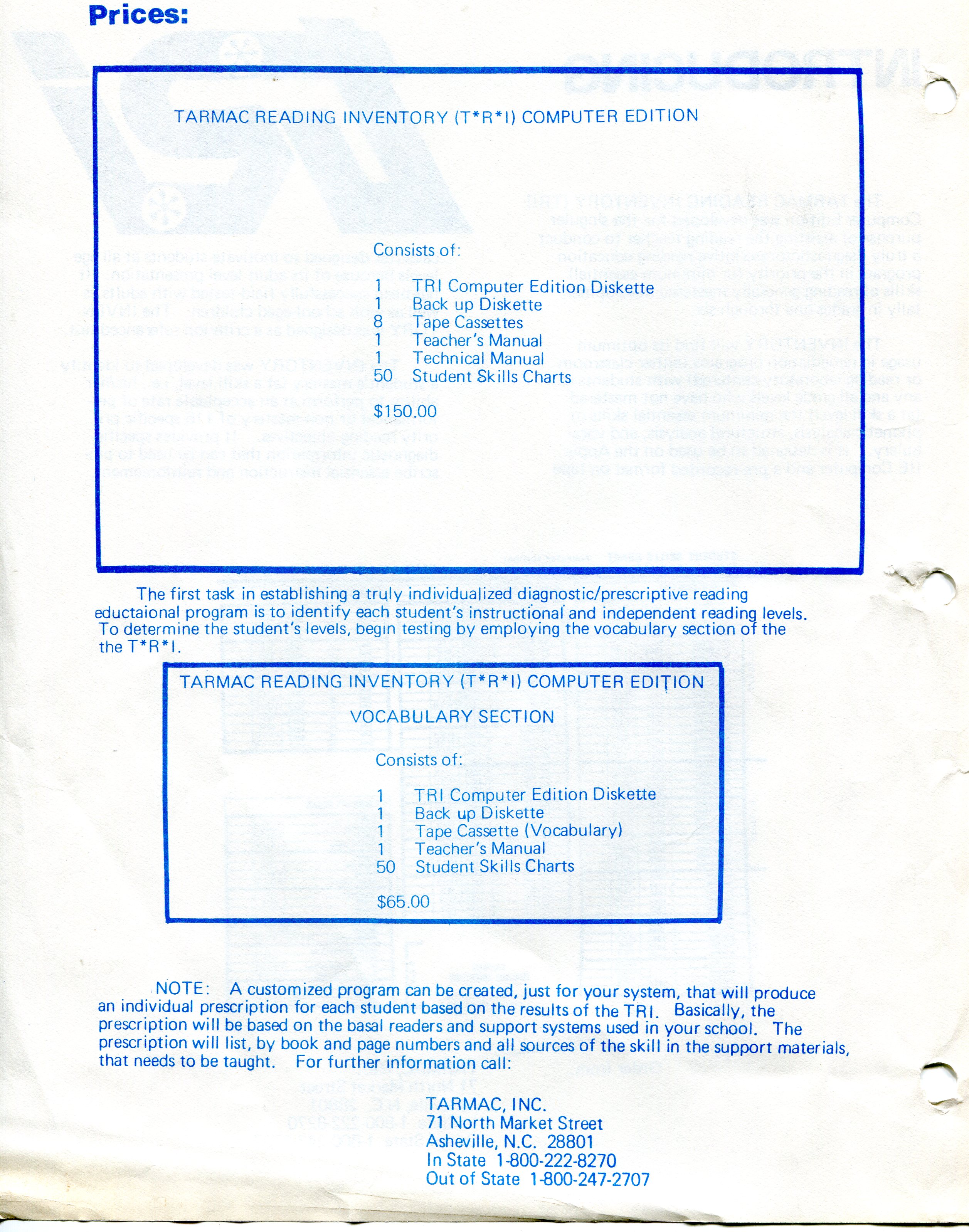
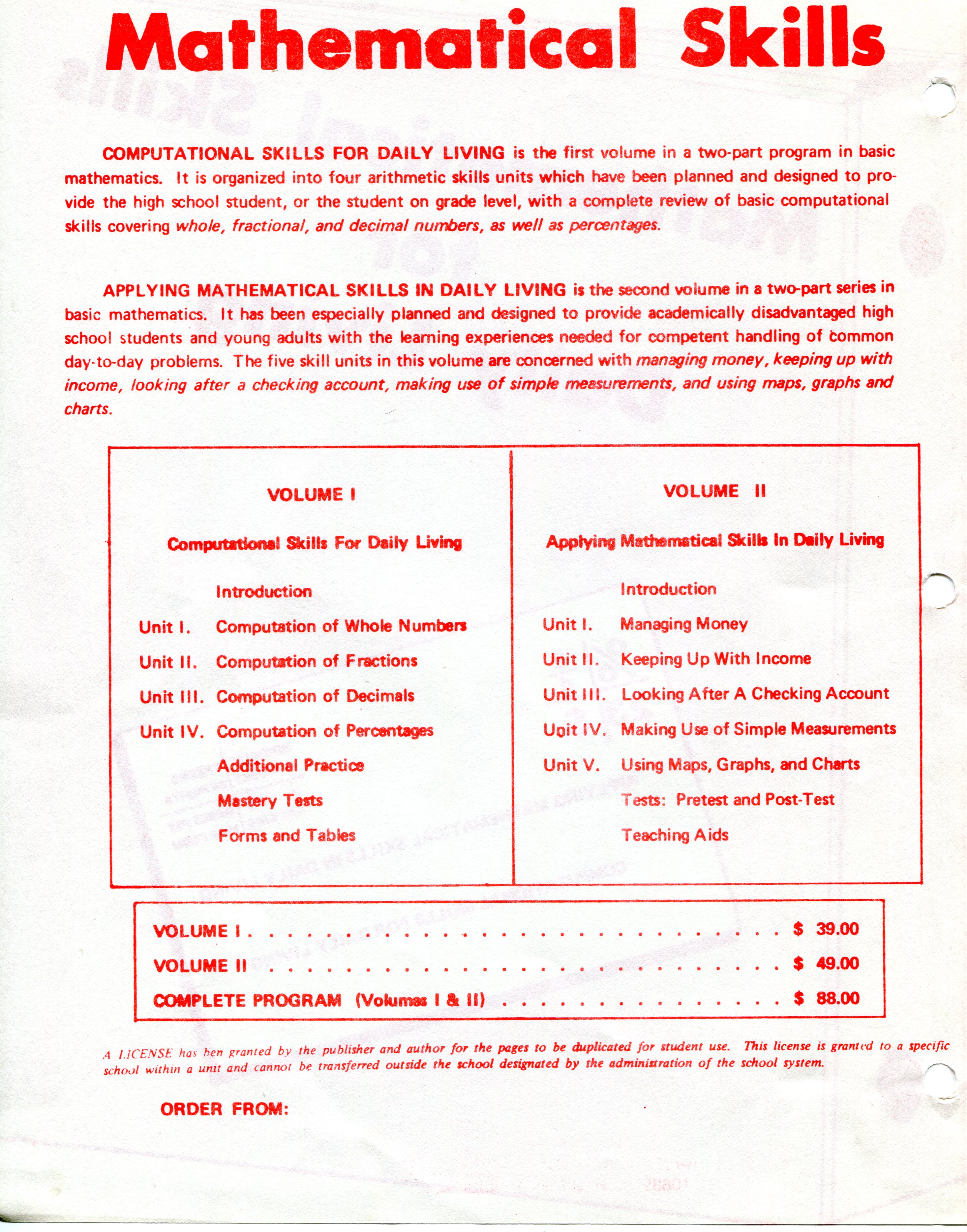
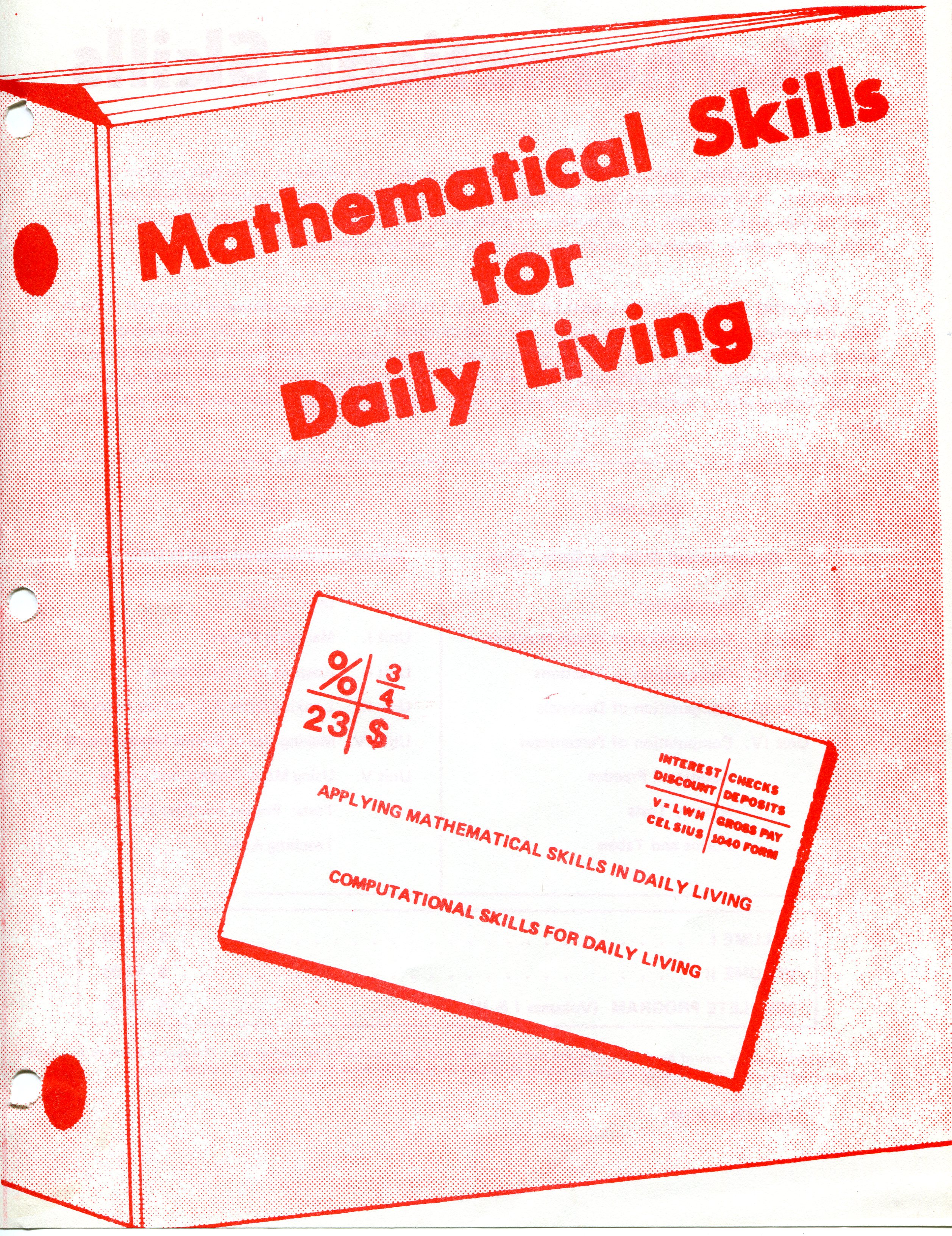
To add audio components to the visual content being delivered on projectors, Tarmac enhanced instruction with the 3M Language Master and the Craig Reader. Seeing a need, the Tarmac Reading Inventory was developed and published by Tarmac to provide testing to assist individualized instruction. During this time the term Behavioral Objectives was introduced and Tarmac marketed the Fountain Valley Teacher Support System, an evaluation program that tested and managed specific skills in a continuum. An auditory instructional component was needed to reinforce skills. Tarmac developed and published IT, an individualized skills based teaching program with audio cassettes providing reading reinforcement. Later Tarmac published the Individualized Skill Drill Mathematics Series, also delivered on cassette. Also a program for older students, Math Skills for Daily Living.
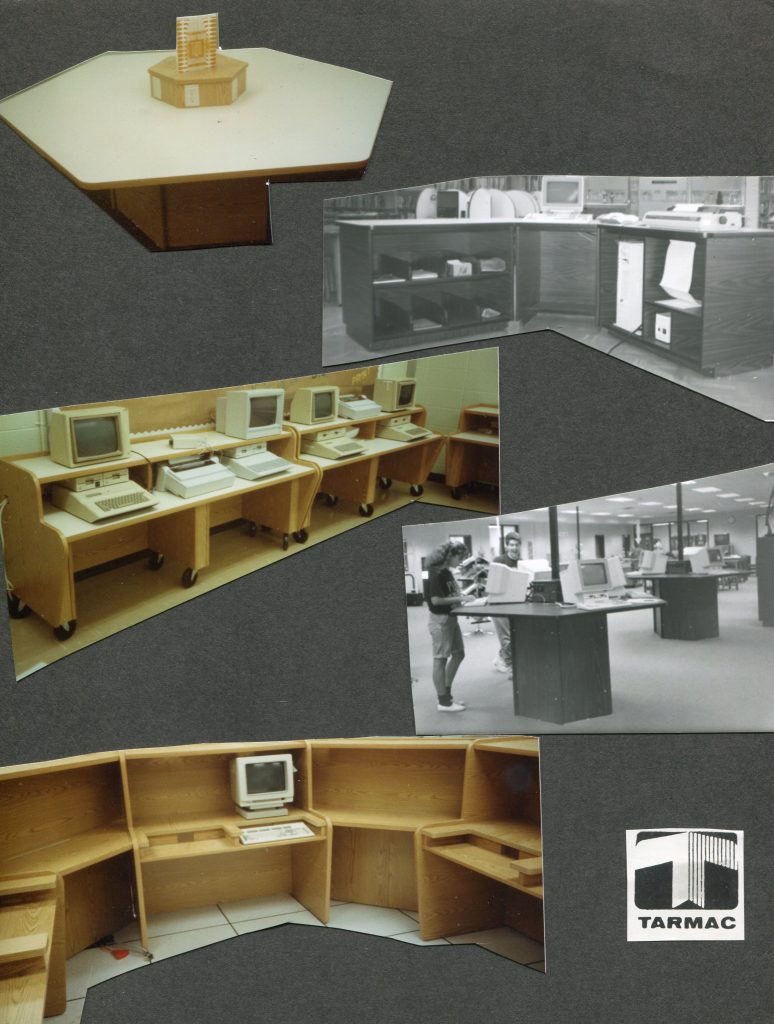
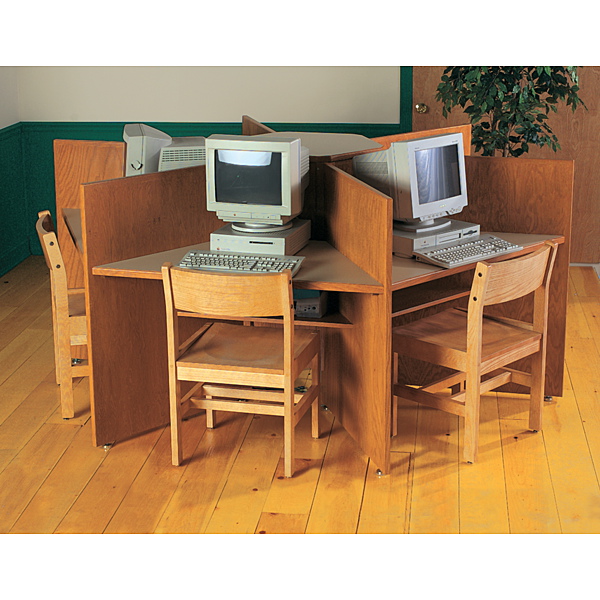
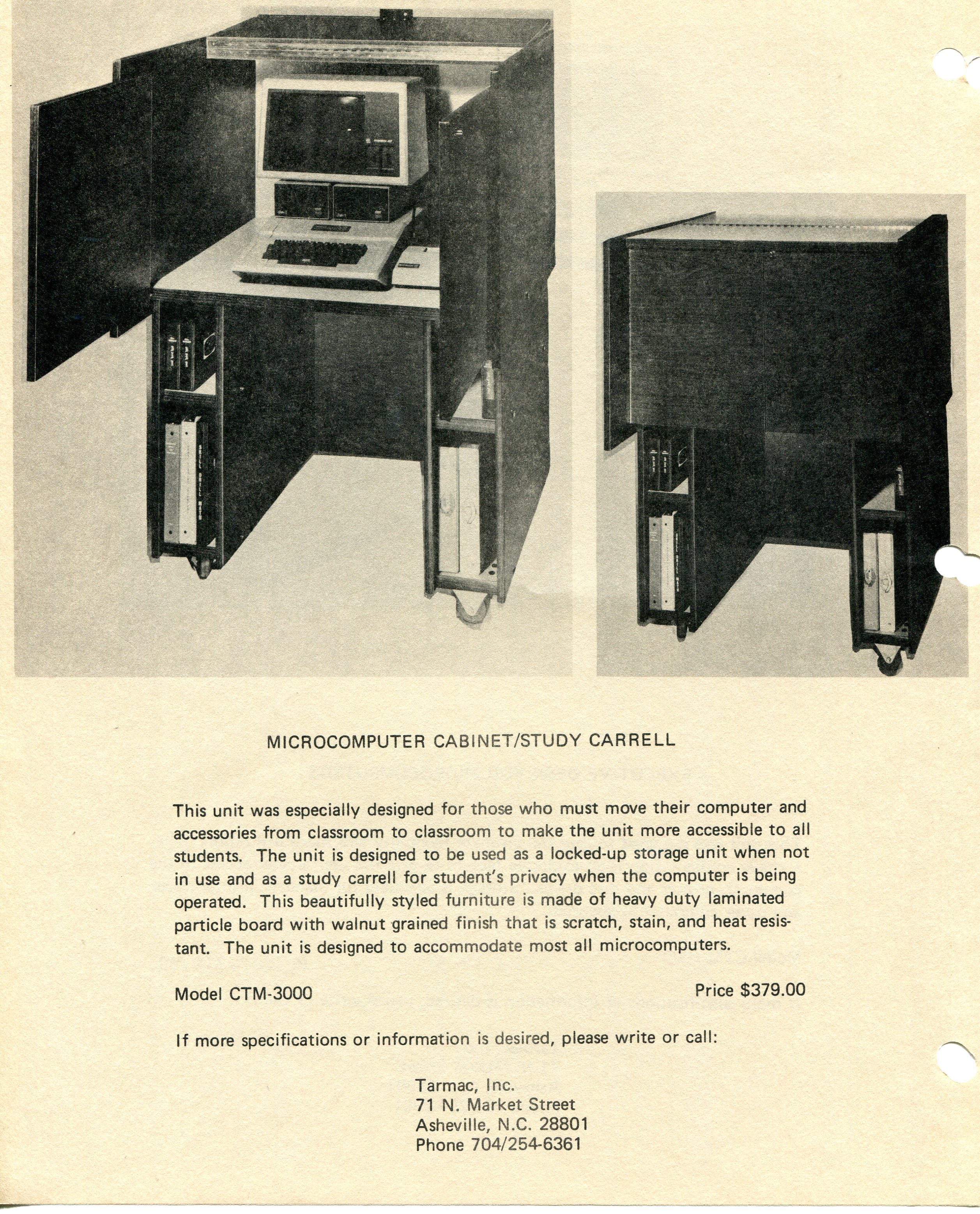
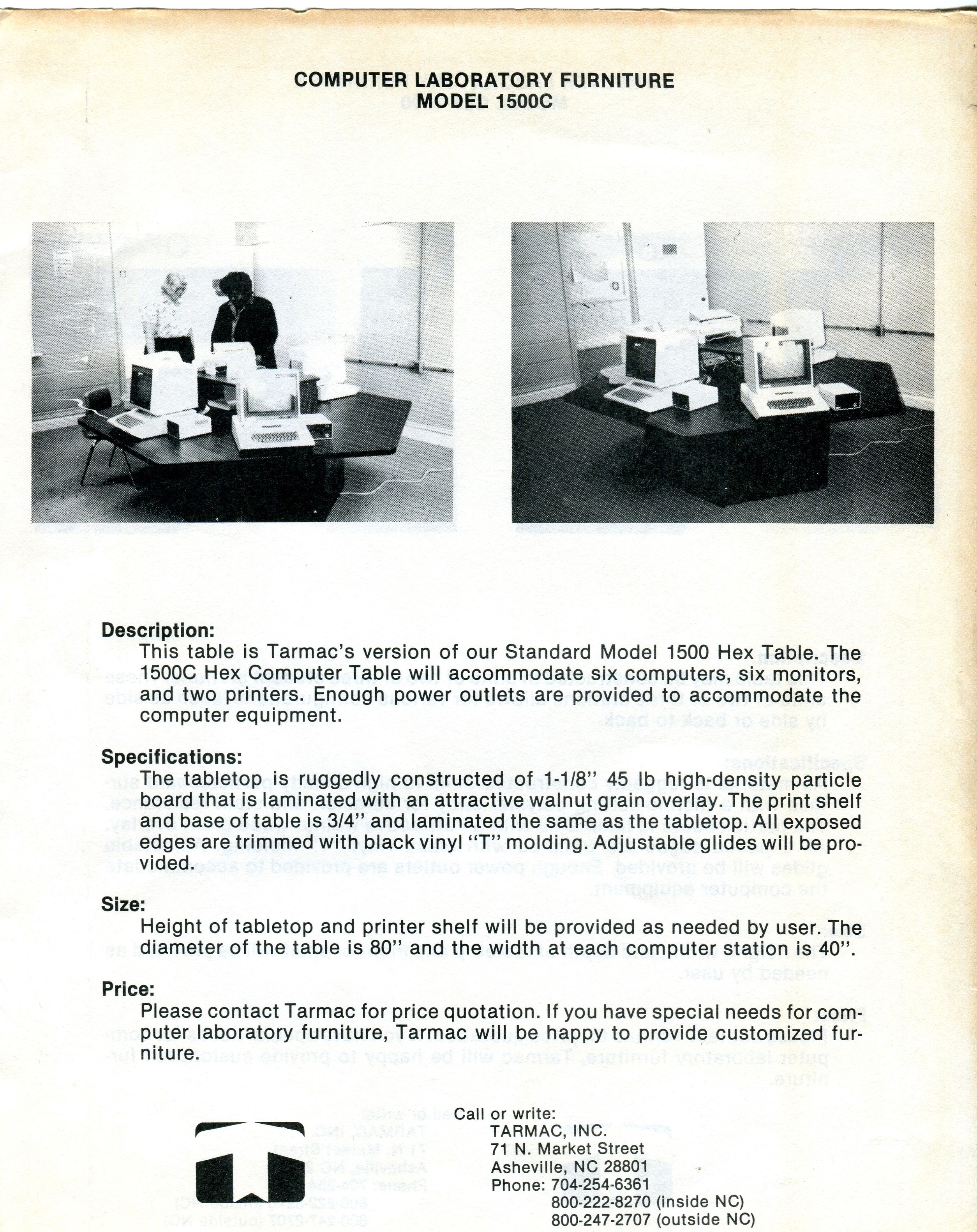
Tarmac’s furniture factory built and installed the study carrels and hexagonal carrels to accommodate students while using the individualized visual and auditory programs to enhance their reading and mathematics skills. Later the furniture factory was given to the employees.
Employing this technology, during these years Burlington, NC, Pender County NC, Portsmouth, VA, Henrico County VA and Wood County WV were designated as Nationally Validated School Systems by the US Office of Education.
1990’s
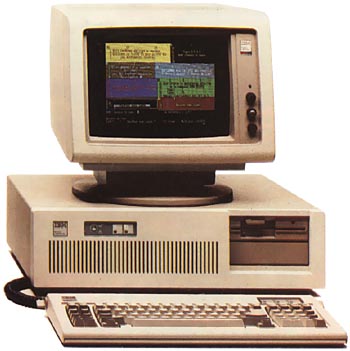
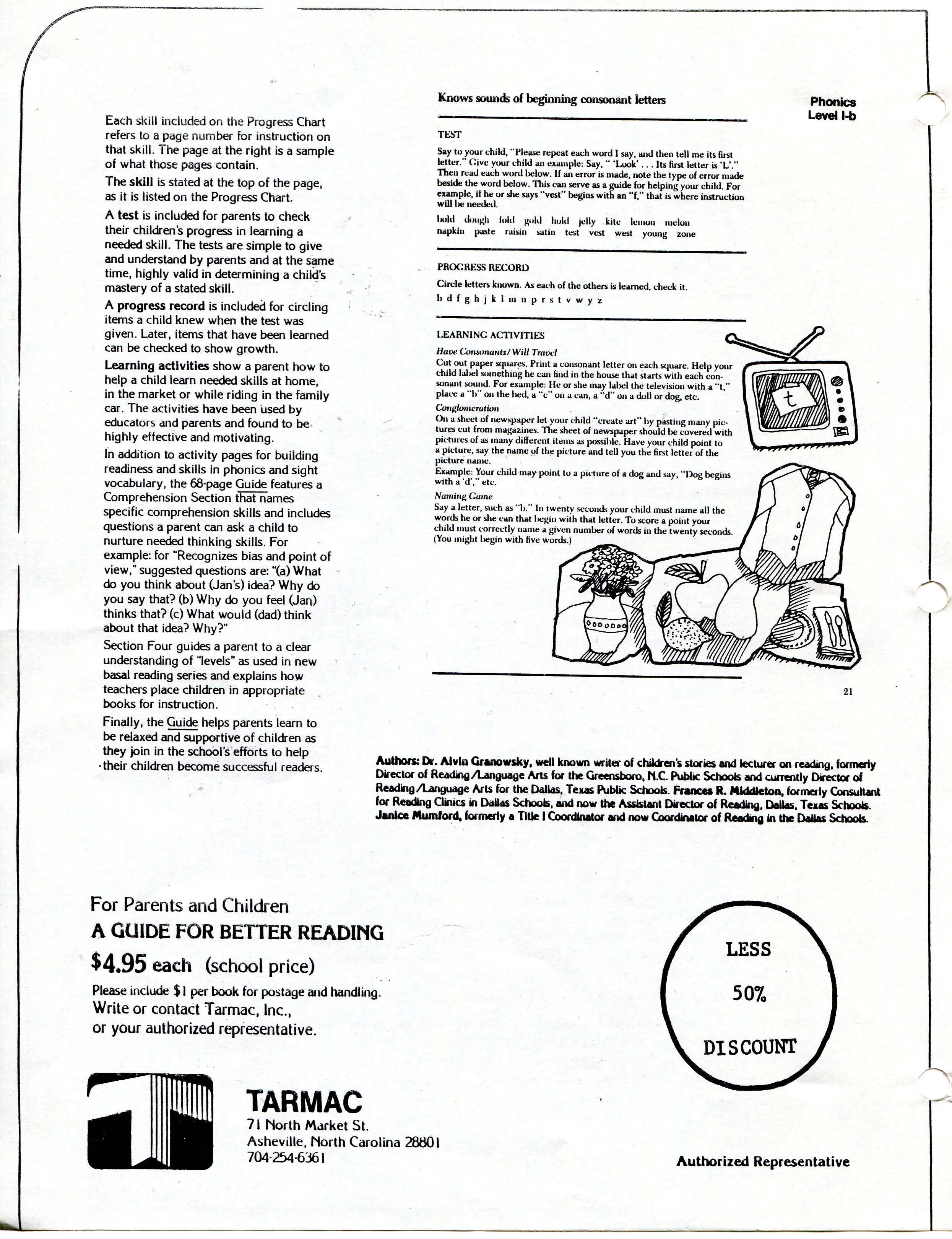
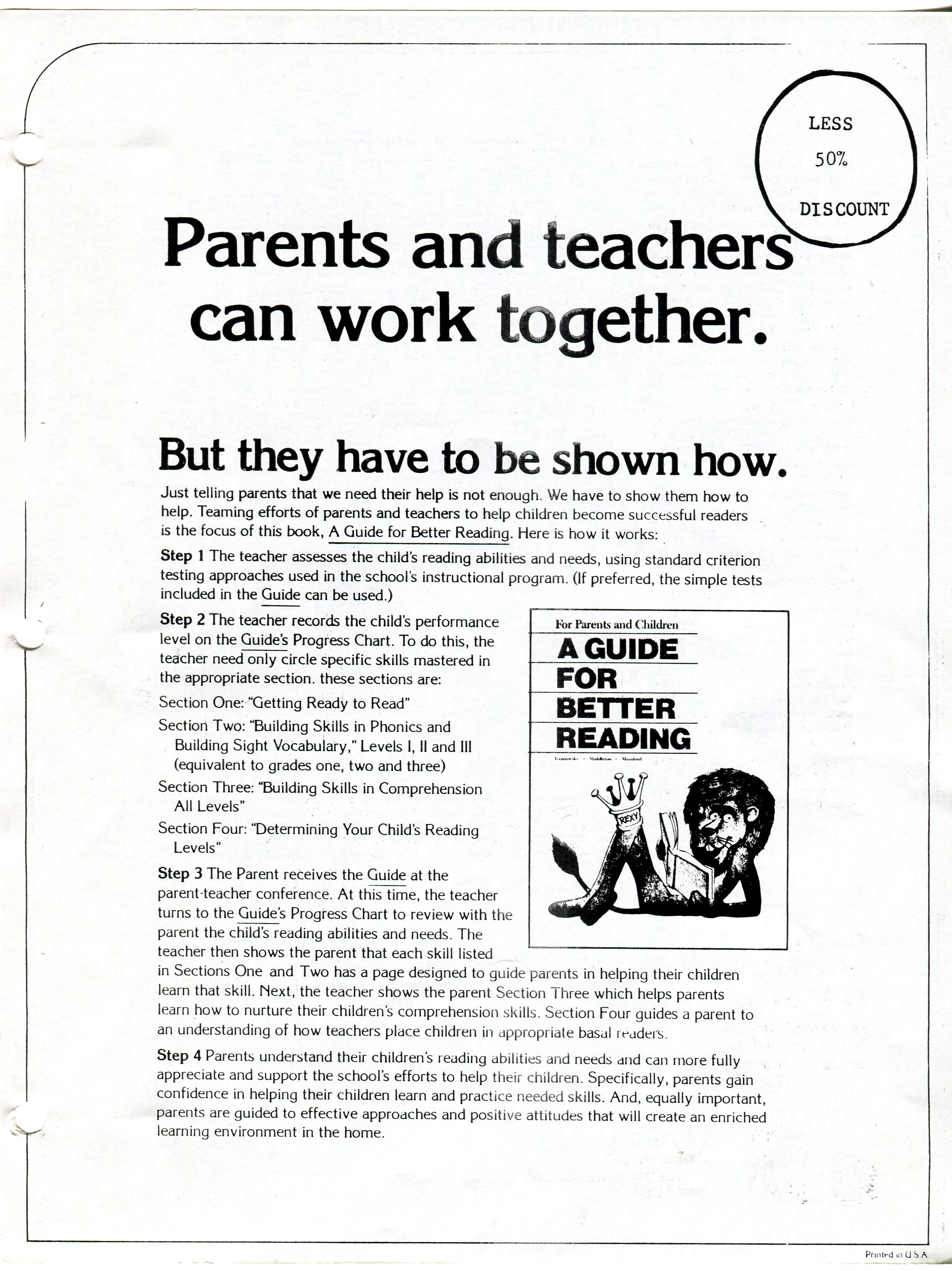
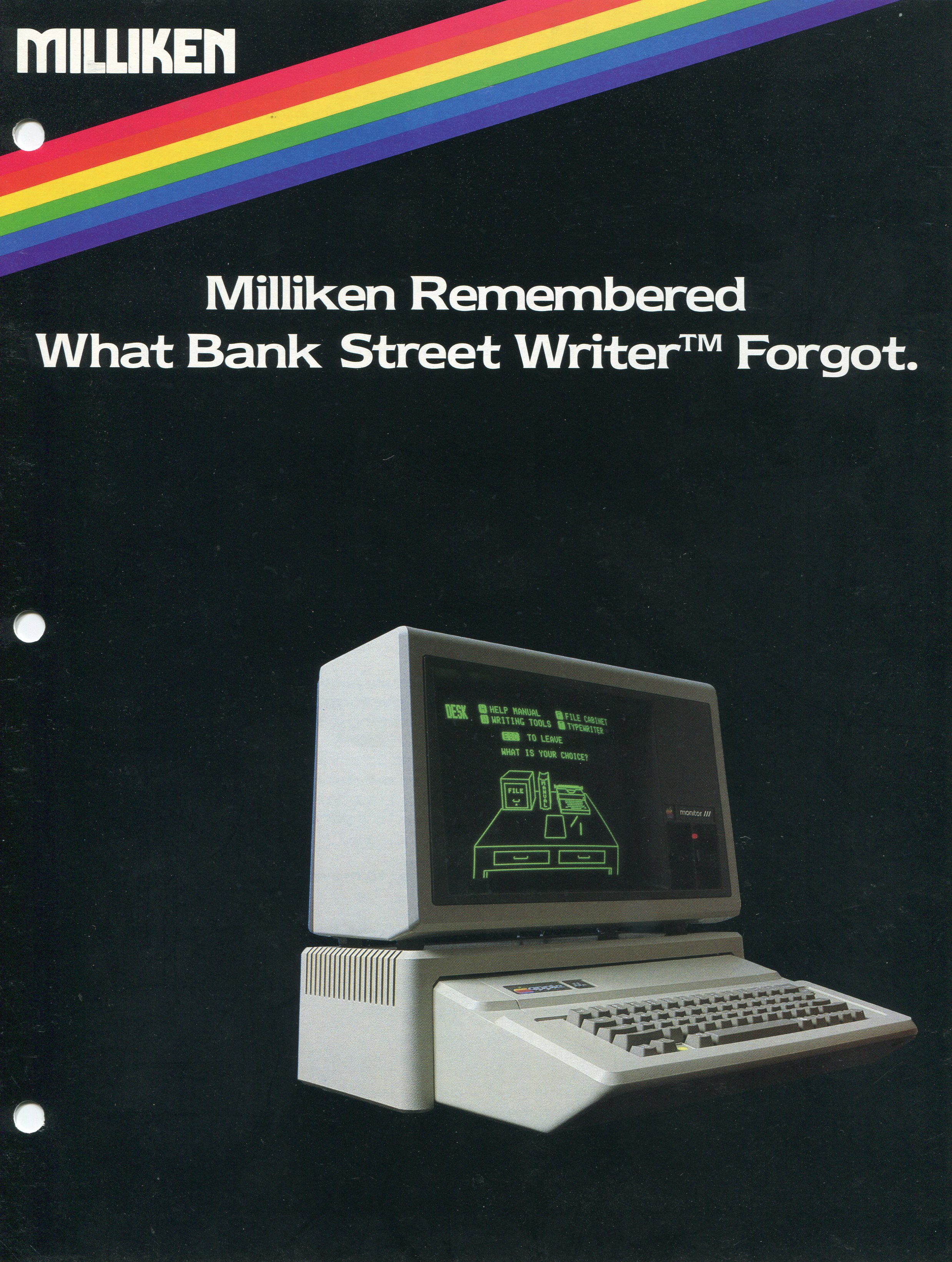
Educational technology began migrating from older technology to Apple I, II, and MS-DOS computers. US Office of Education Validated Mathematics Laser Disk programs were popular since they provided added instruction and reinforcement. West Pender Middle School’s staff installed a DOS computer lab and began using the MS-DOS version of programs during a summer program that were previously delivered on projectors. Most software programs were small stand-alone programs. Tarmac was Scholastic’s #1 dealer. Scholastic purchased a Tarmac published booklet, “A Guide for Better Reading.” In the mid-1990s, silent reading fluency development migrated to MS-DOS computer programs. Reading Plus was introduced during this time. This new system provided fluency in silent reading development, vocabulary improvement through contextual analysis, decoding practice, extensive reading, and comprehension enhancement.
To more accurately describe what Tarmac had grown into, in 1992, the name was changed to Tarmac Educational Services. (TES)
2000s
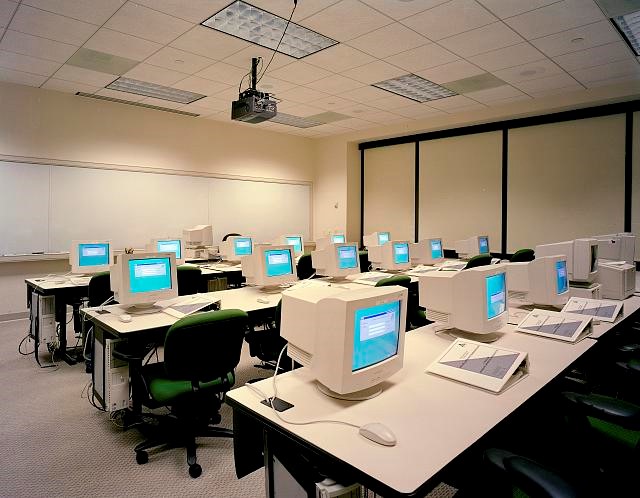
Technology for education began developing quickly. Online plus LAN/WAN, loaded on the school’s or district’s file servers, became available for schools to use. In early 2003, Mark Taylor developed a web-based version of Reading Plus. The new version offered the potential for online delivery as well as LAN and WAN use options. During the same year Visagraph III, designed by Taylor Associates, became an integral diagnostic component of the Reading Plus program. Improvements in technology allowed programs to be delivered online, anywhere on desktops, laptops, and handheld computers without additional uploads or downloads. Parkland High School in Winston Salem effectively implemented the software programs and was named “A Model High School” by the USOE.
Archive Image Gallery
The media archive is organized by topic and approximate era, using dates from filenames and titles where available. Select any image to open it in the black lightbox, then use the left and right arrow keys to move through the complete archive.
- Classrooms and Students
- Audio Visual and Early Classroom Technology
- Furniture and Learning Labs
- Catalogs and the Software Era
- Reading Programs and Inventories
- Math, Writing, and Daily Living Programs
- Edufun and Other Software Materials
- Reading Plus, Testimonials, and Partners
- Miscellaneous Preserved Media
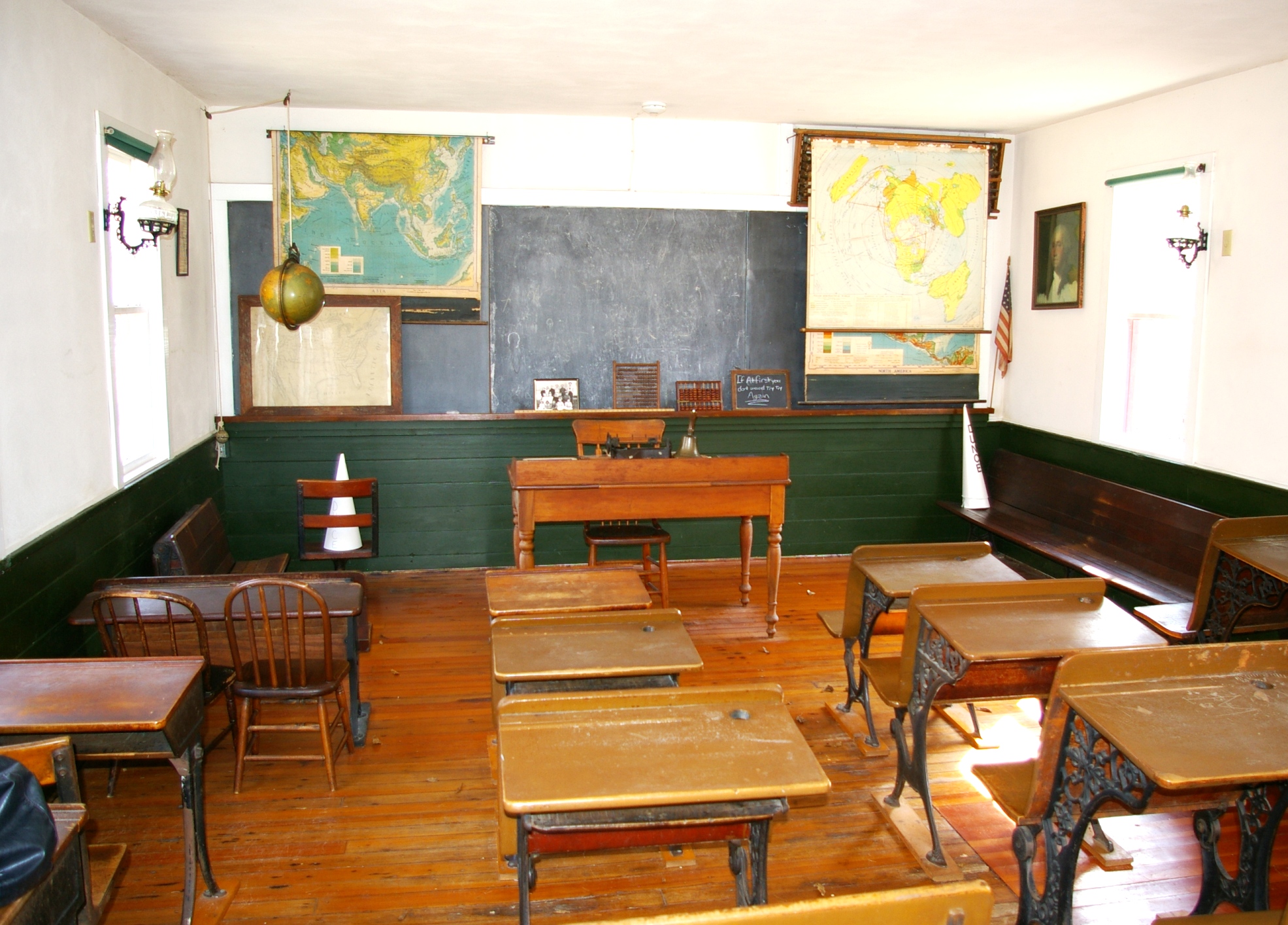
Classrooms and Students
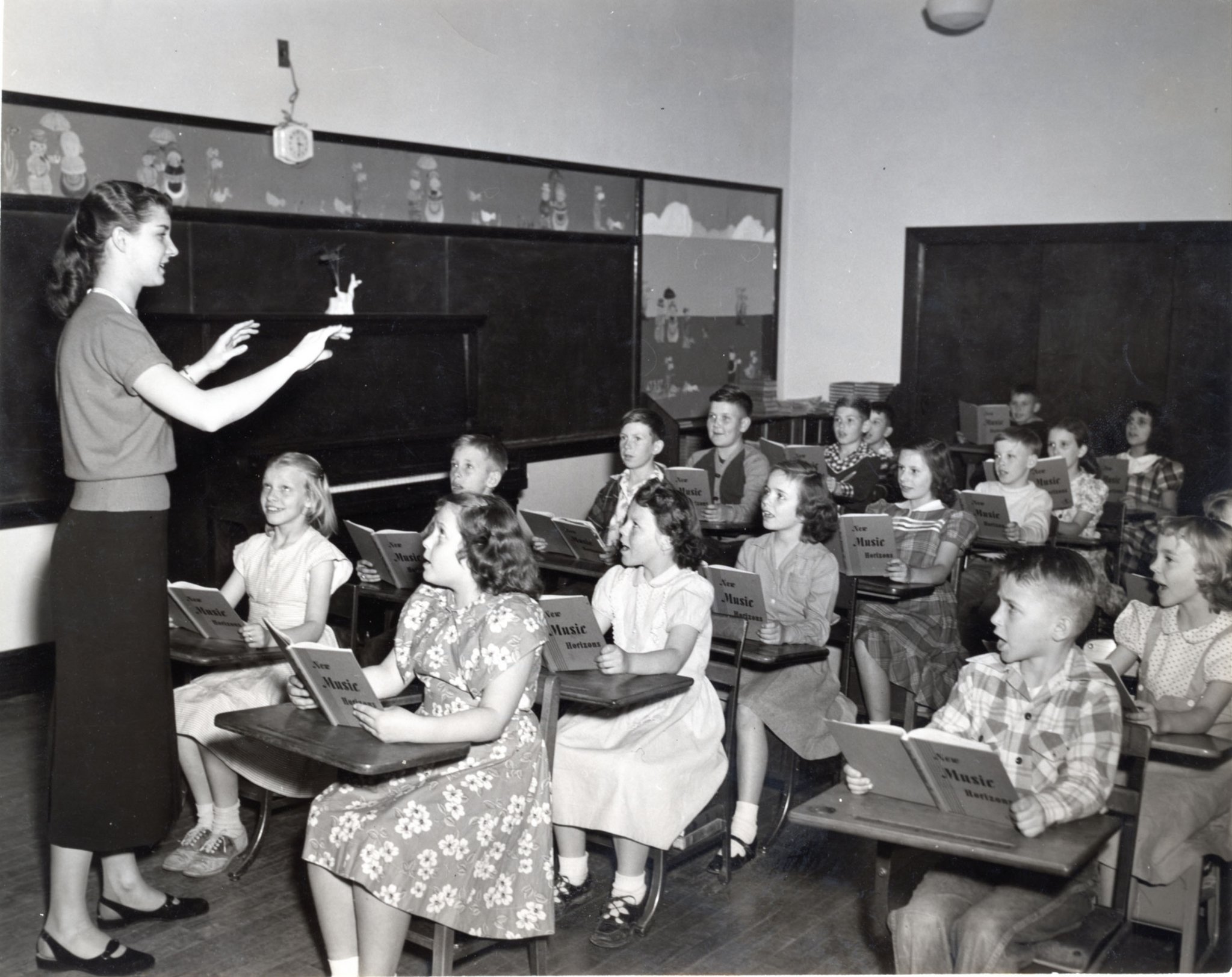
These images set the educational context for Tarmac's story: classrooms, students, and changing learning environments from traditional classrooms to laptop-era instruction.

Audio Visual and Early Classroom Technology
Tarmac began in the audio visual era. This group collects projectors, reading machines, and early classroom technology that shaped instruction before computer labs became common.
Furniture and Learning Labs
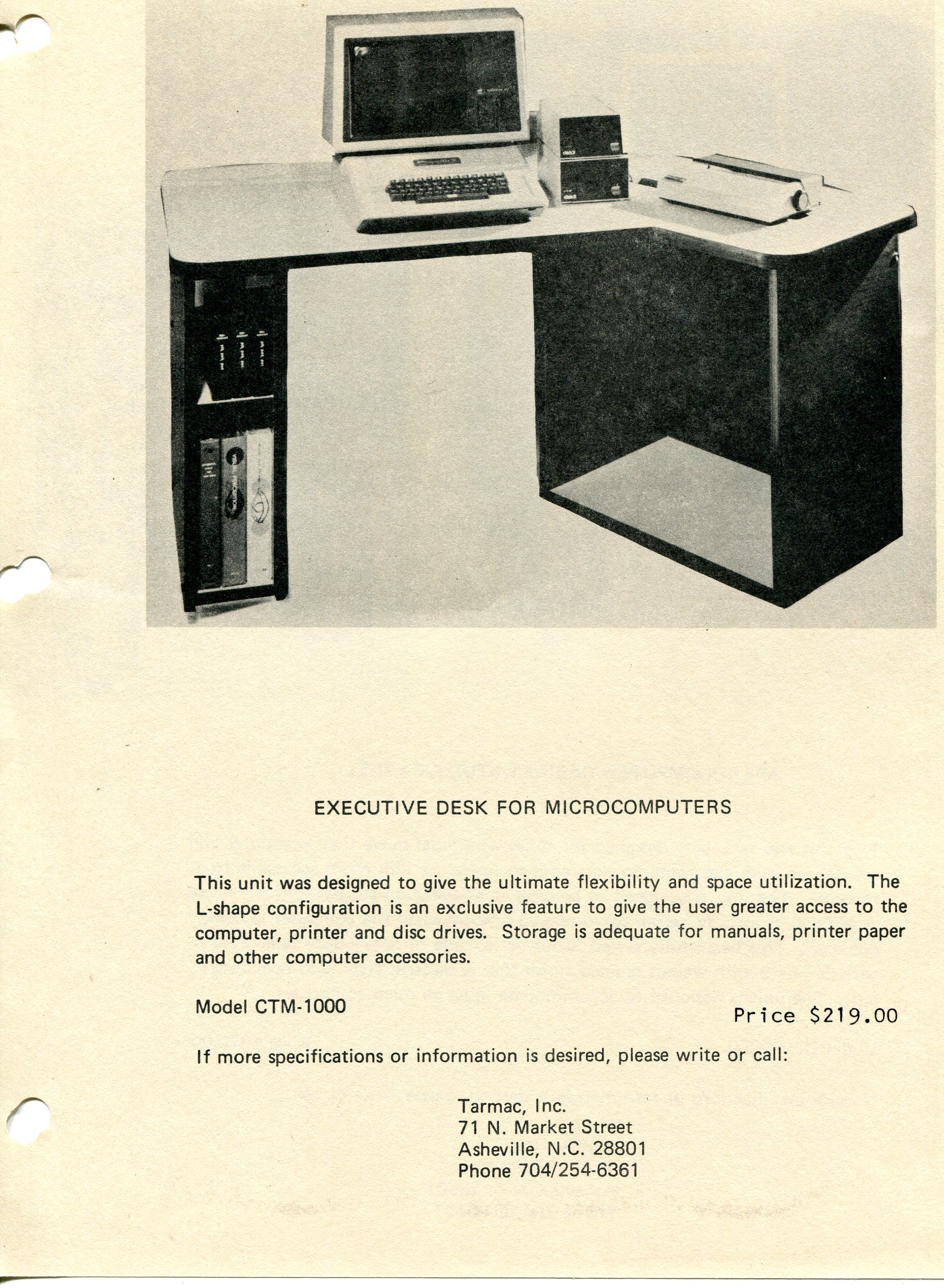
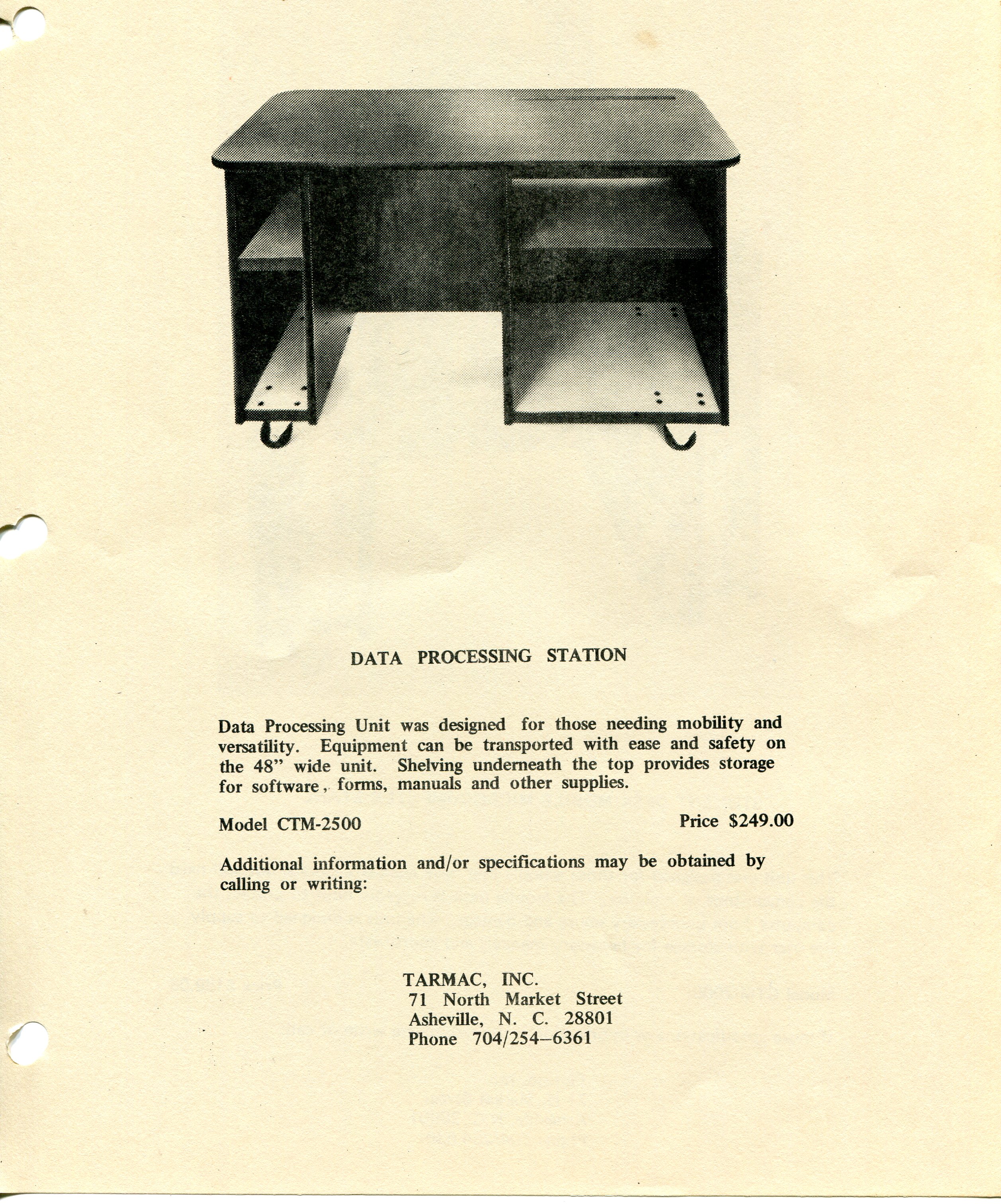
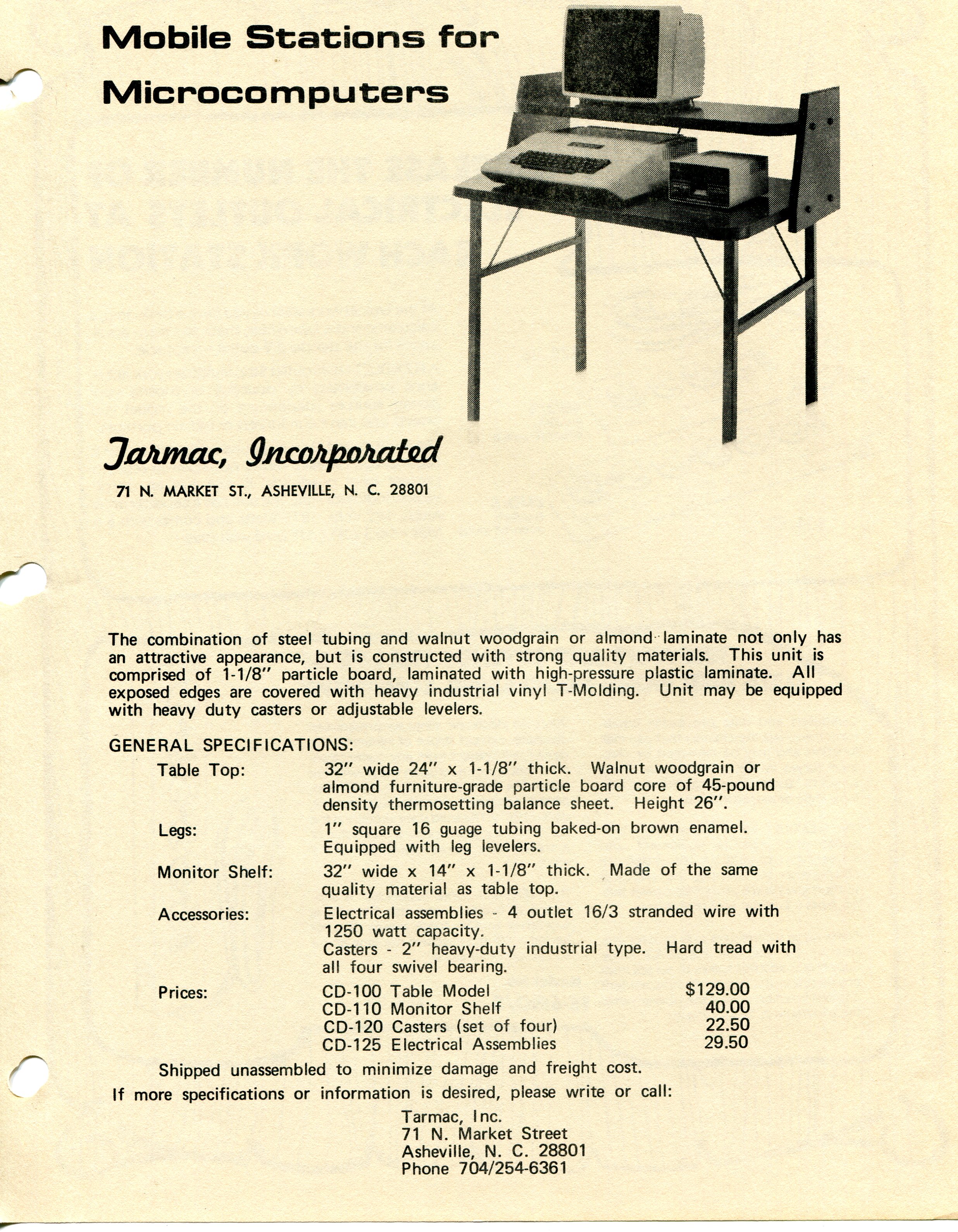
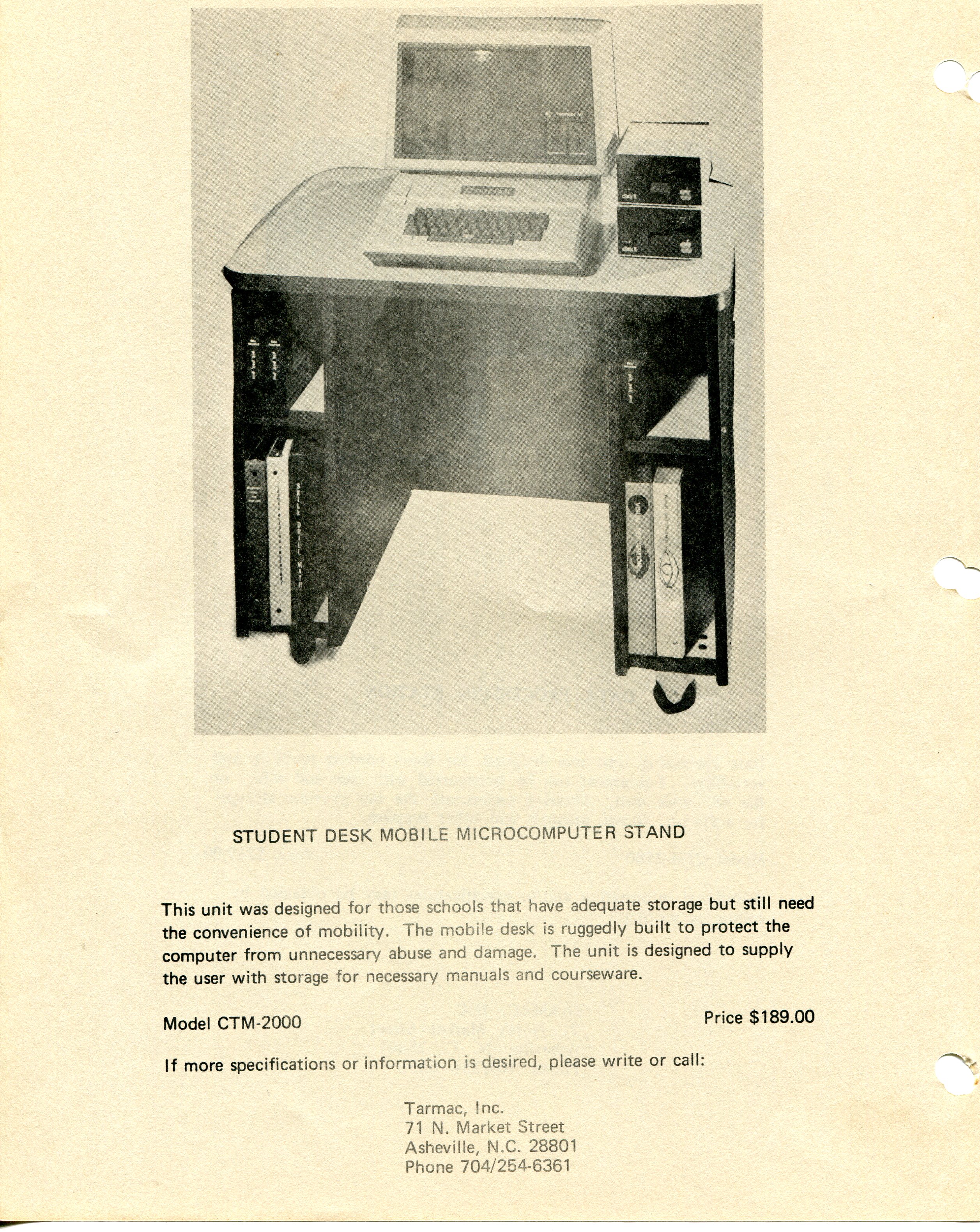
Tarmac also designed and sold furniture for individualized instruction, including study carrels, computer cabinets, desks, mobile stations, and reading lab layouts from the 1980s and early computer era.

Catalogs and the Software Era
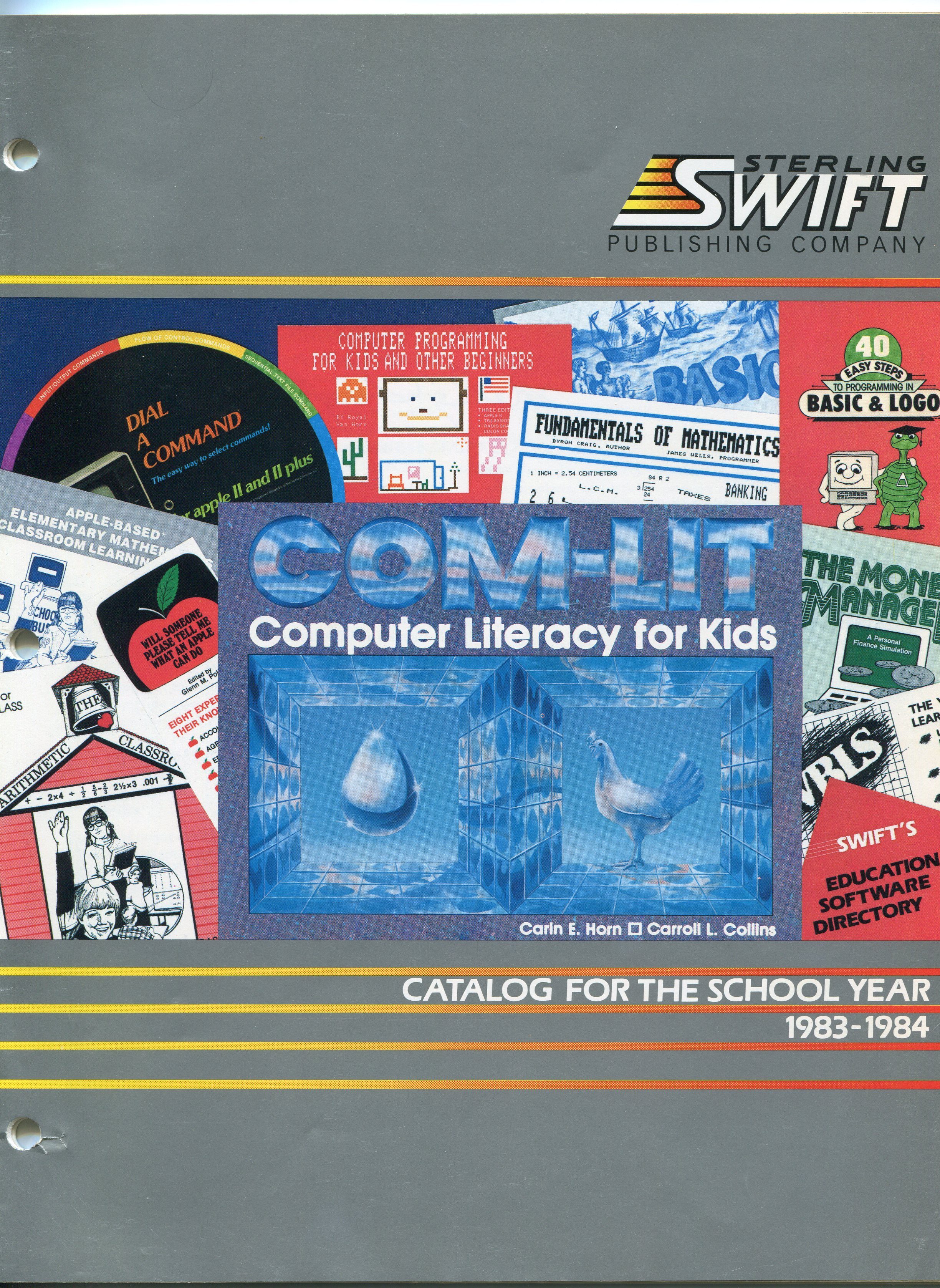
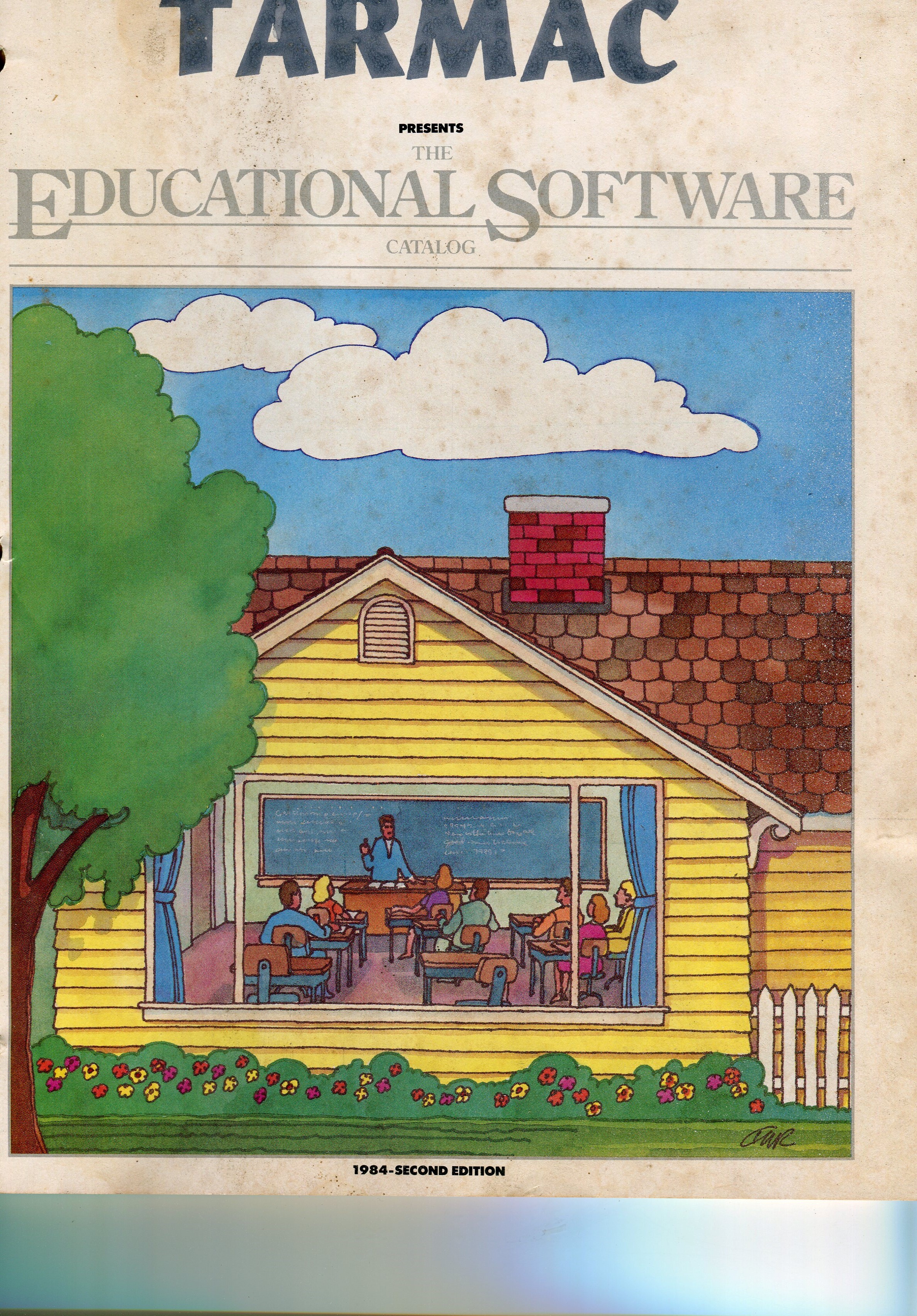
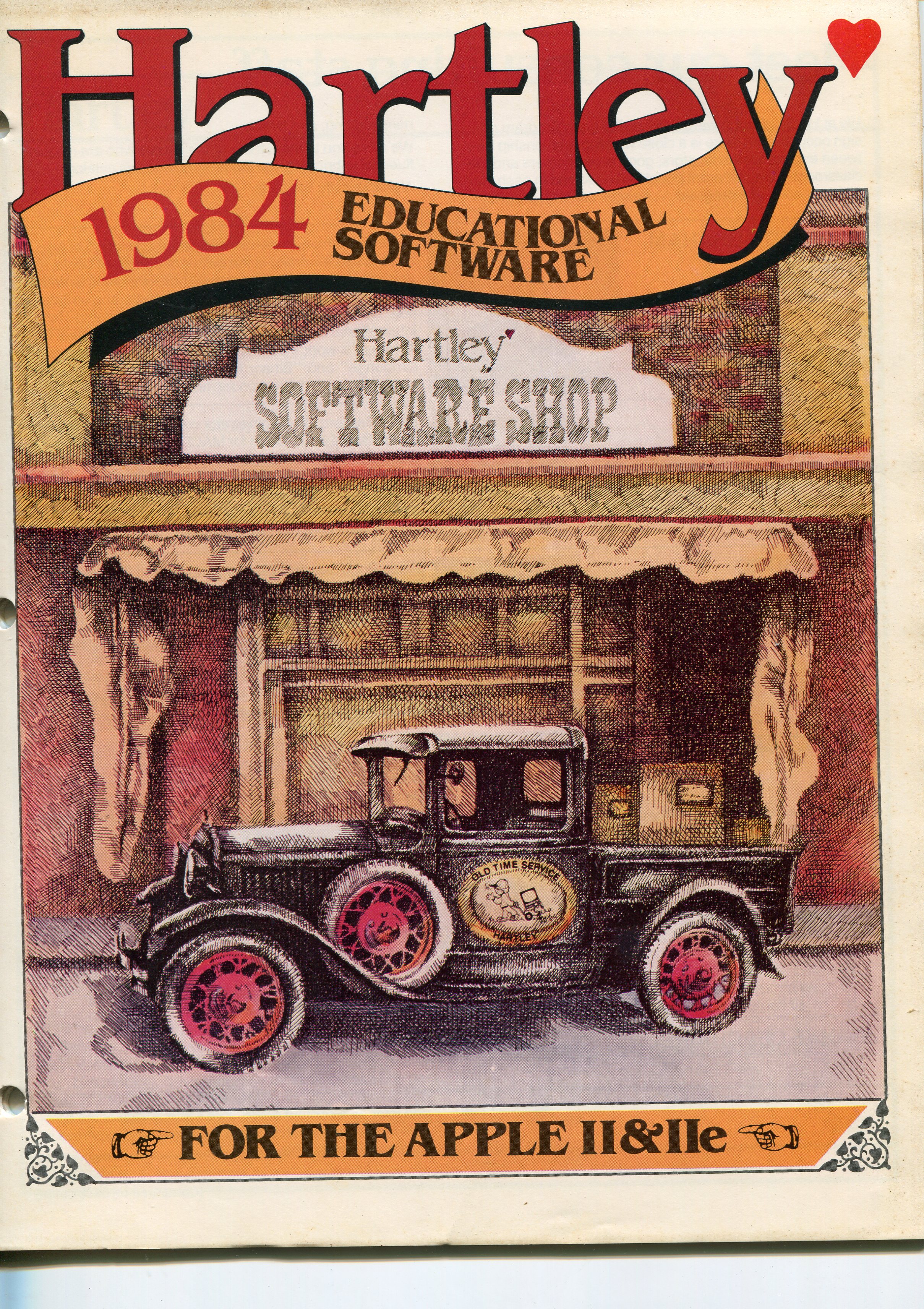
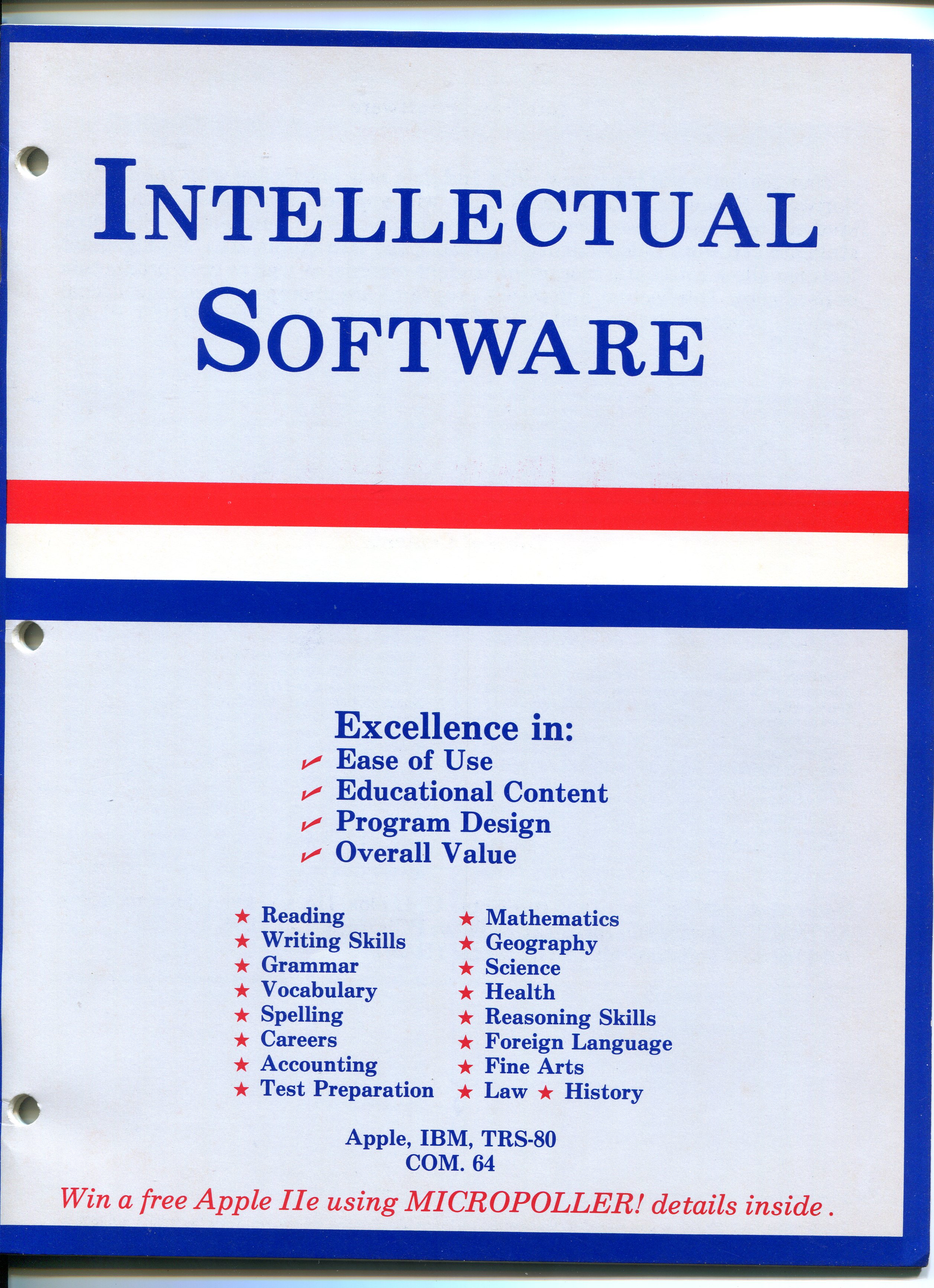
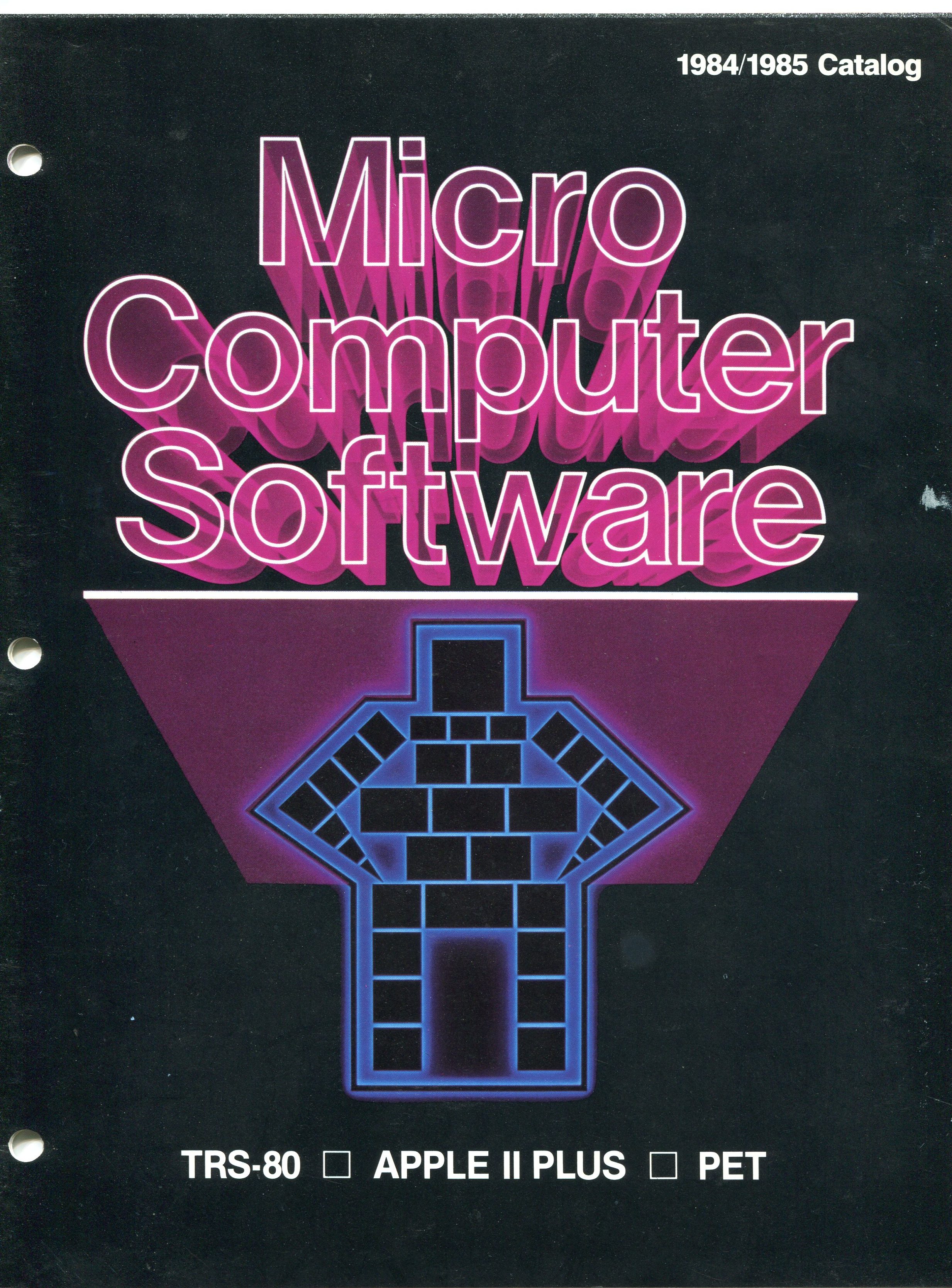
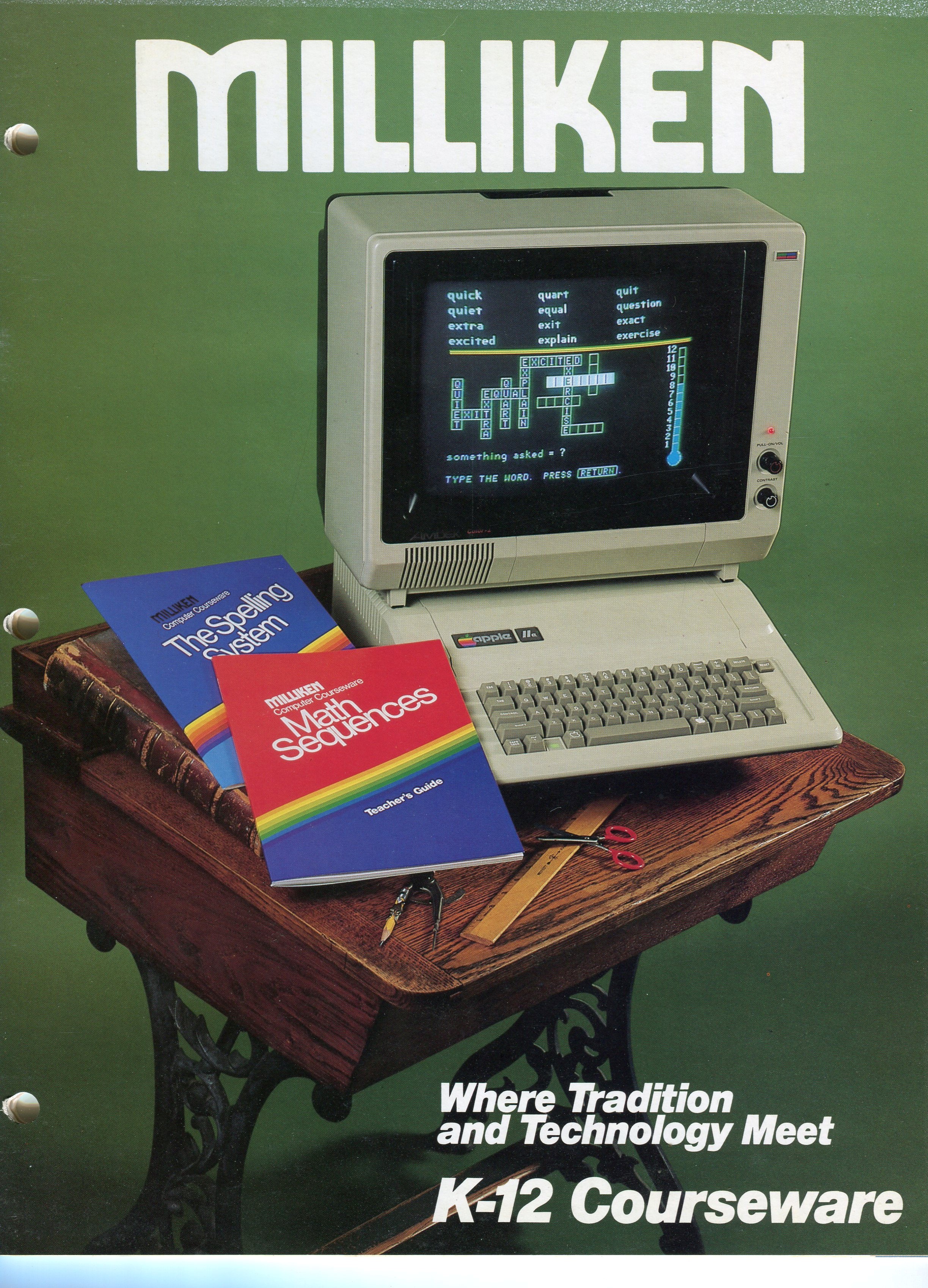
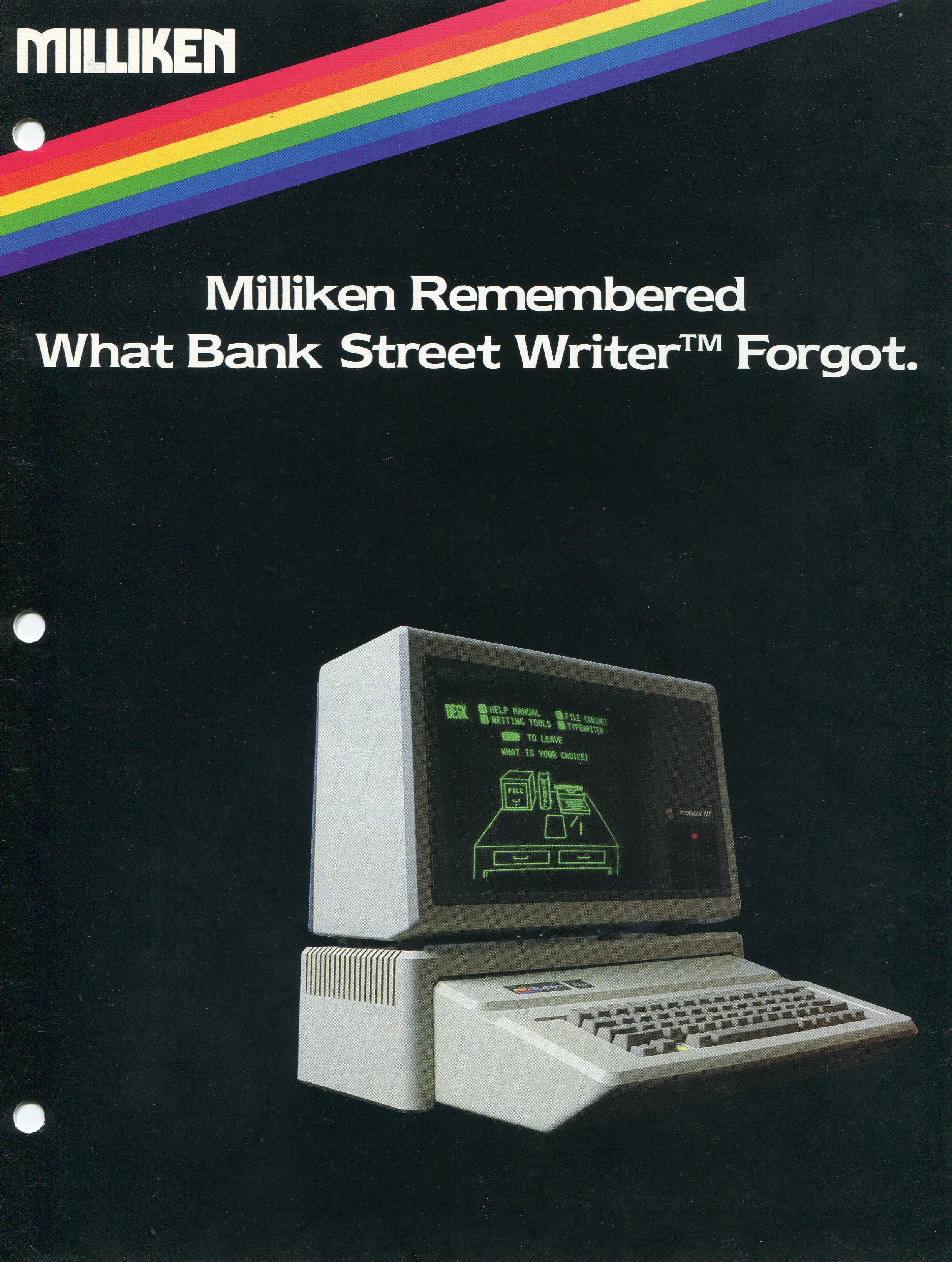
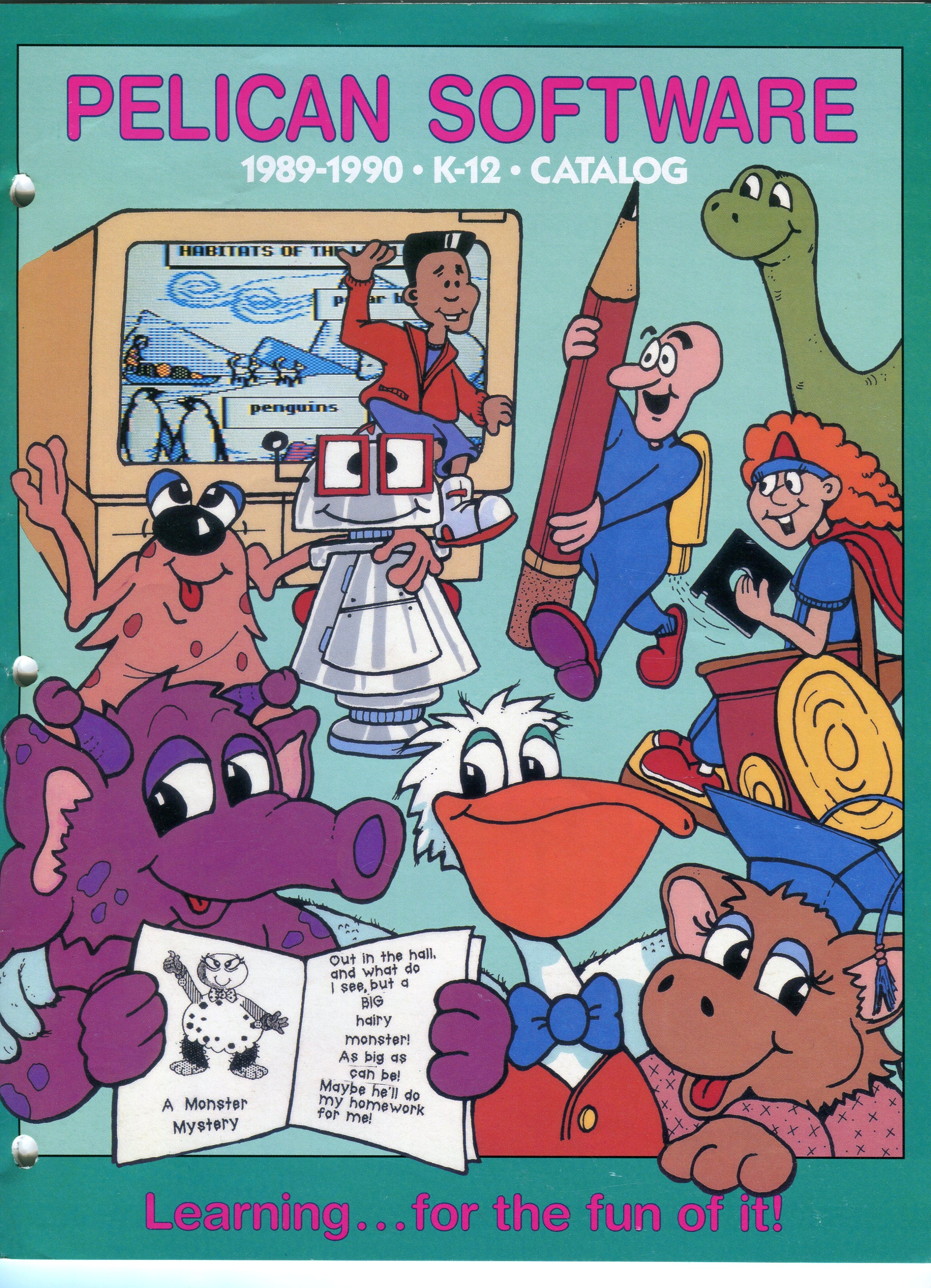
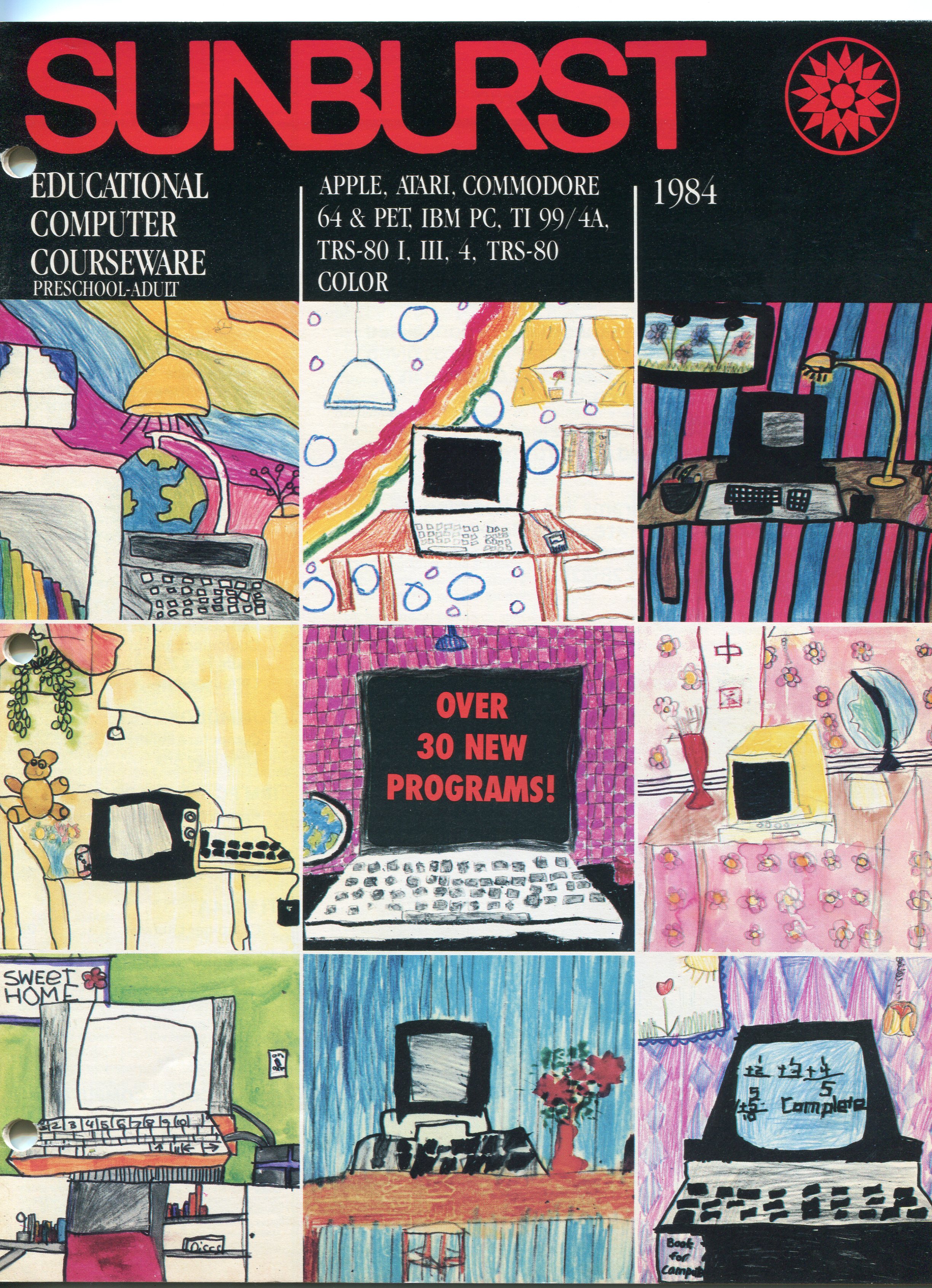
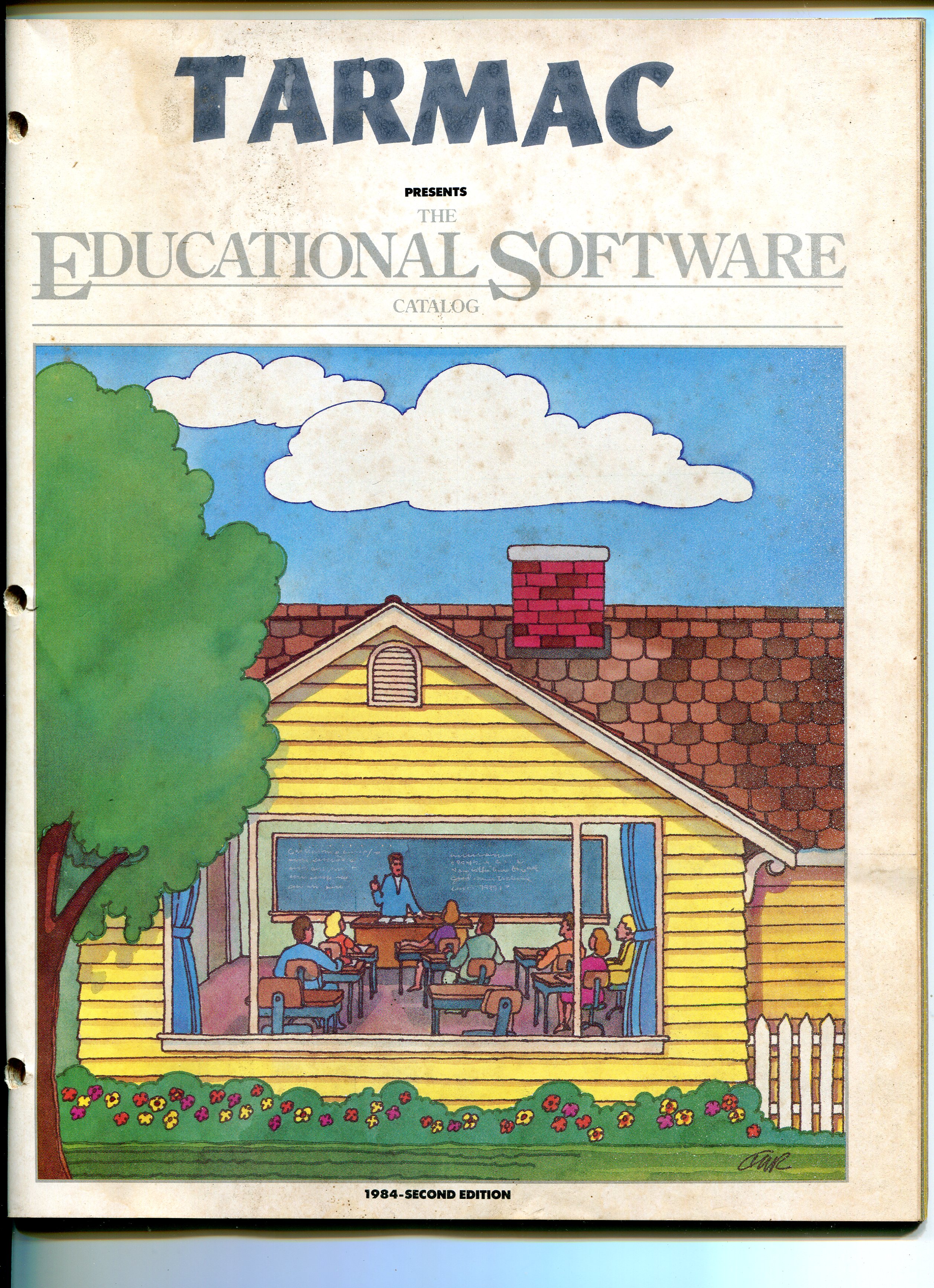
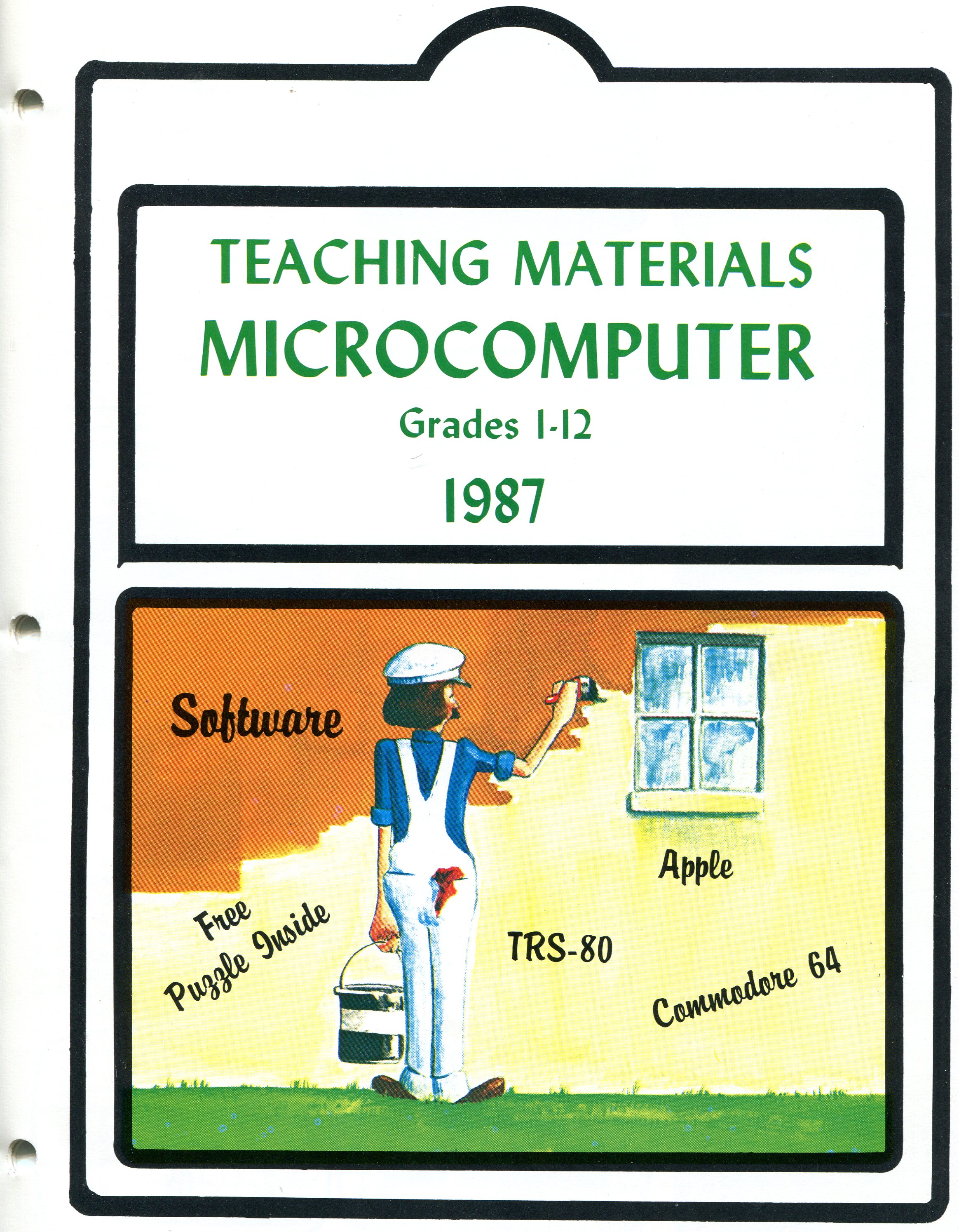
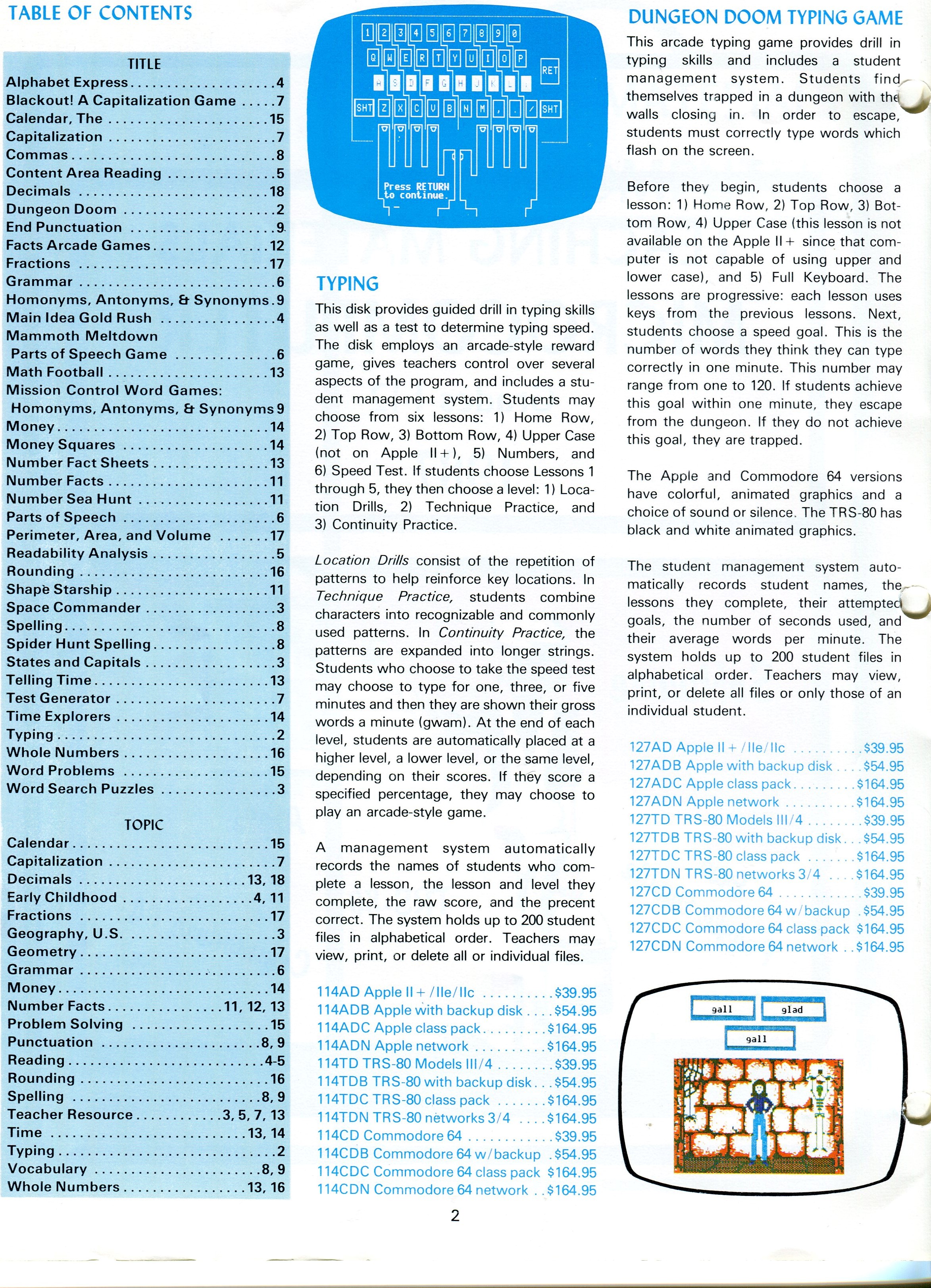
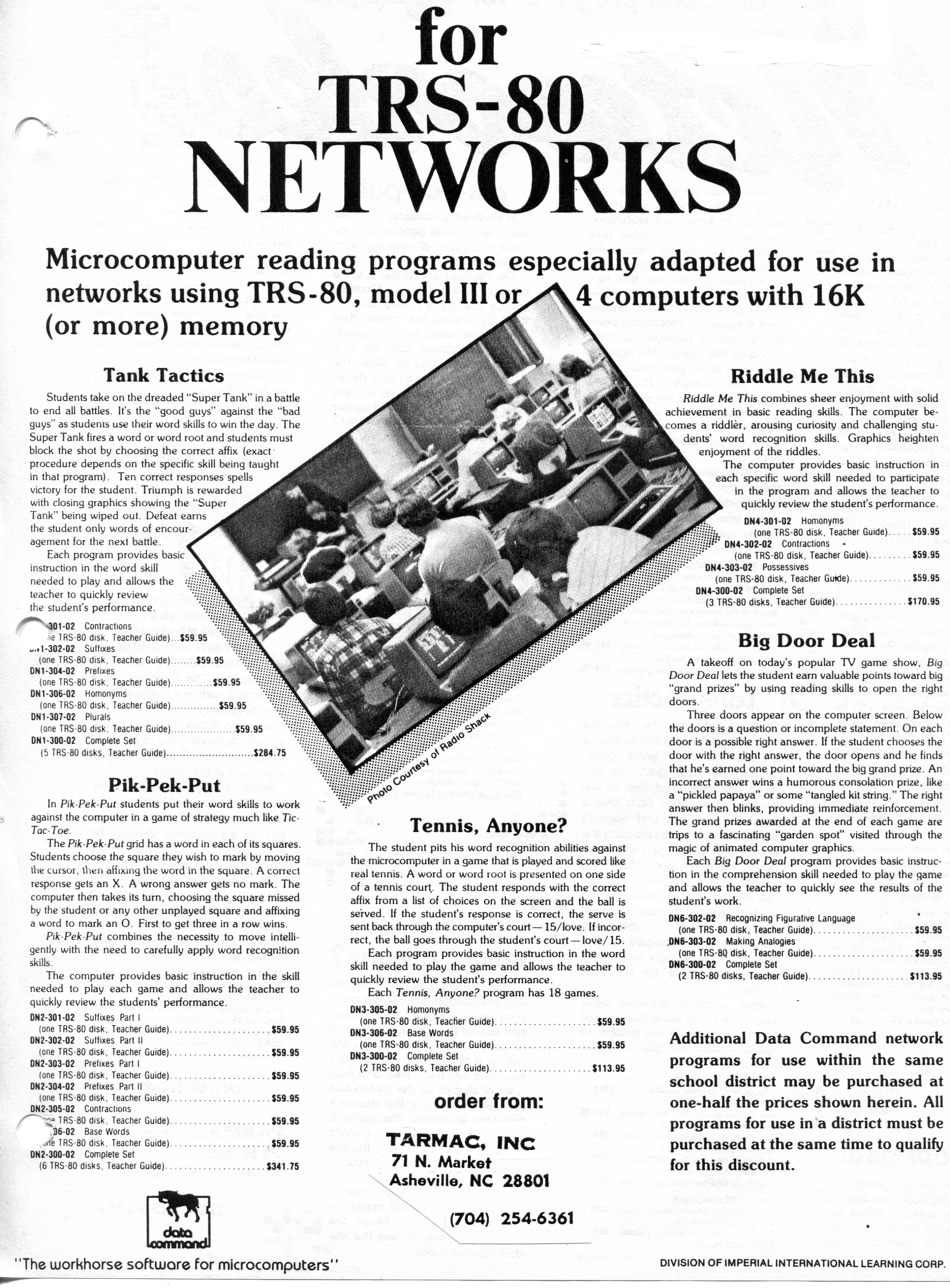
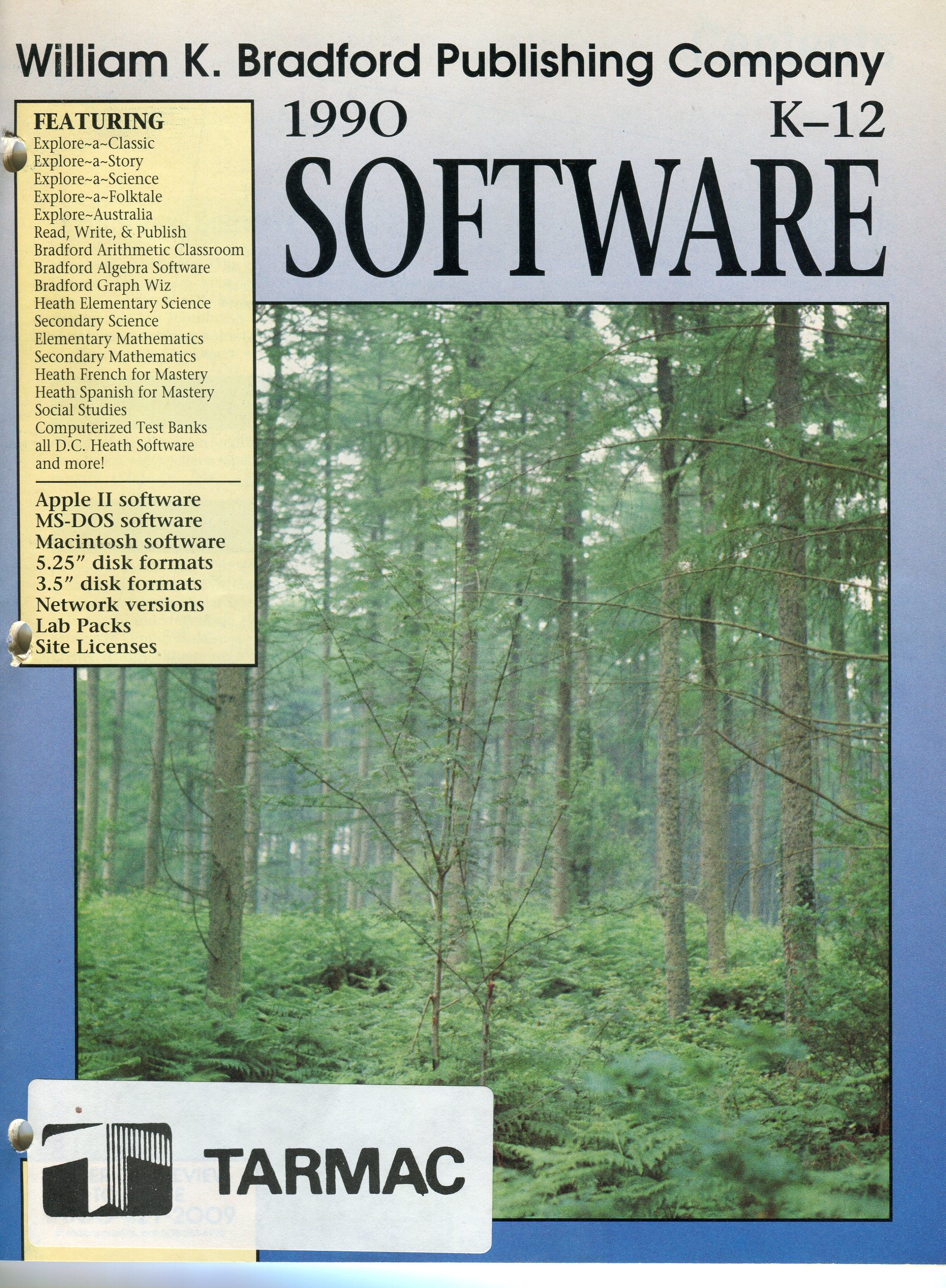
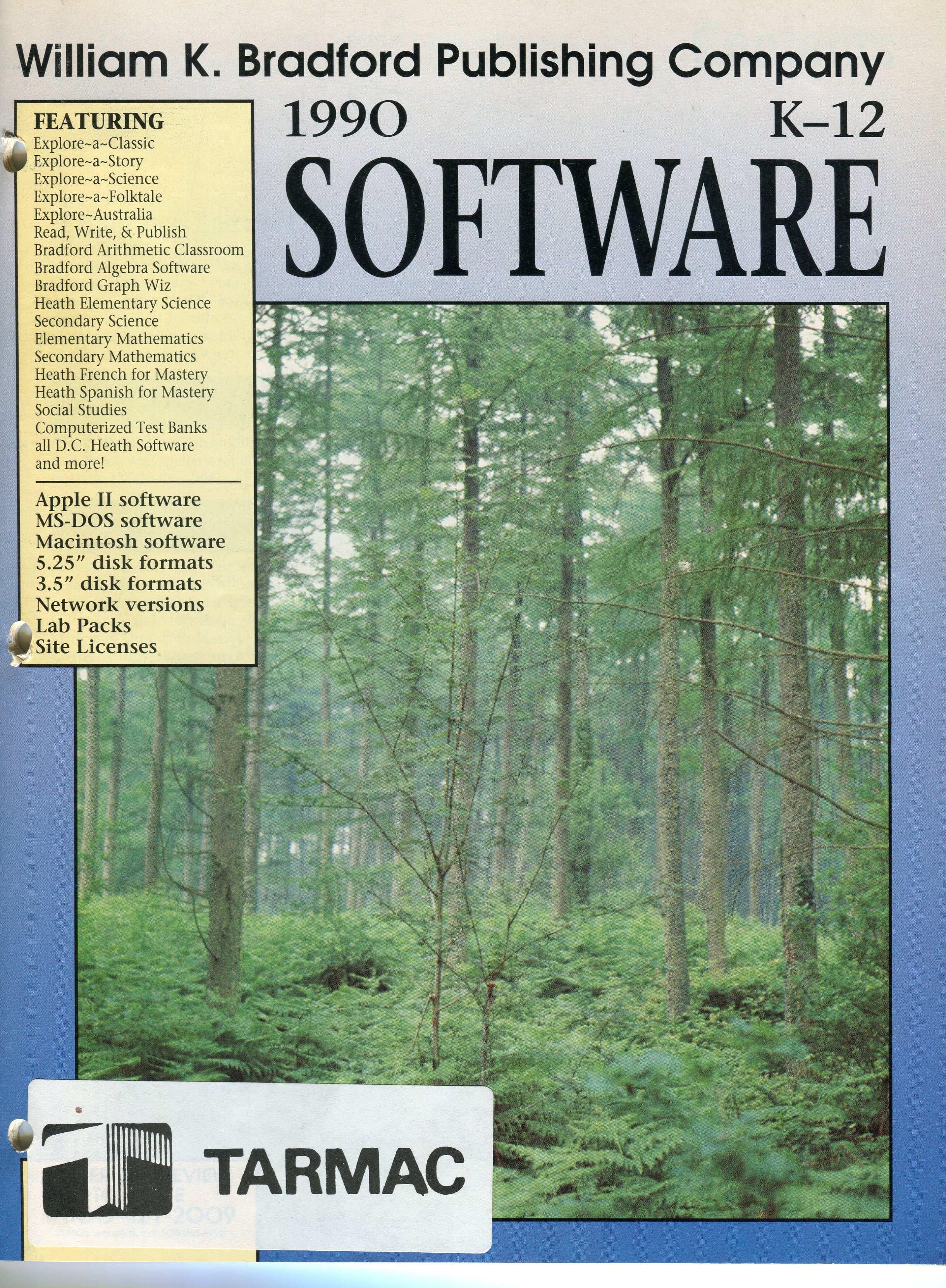
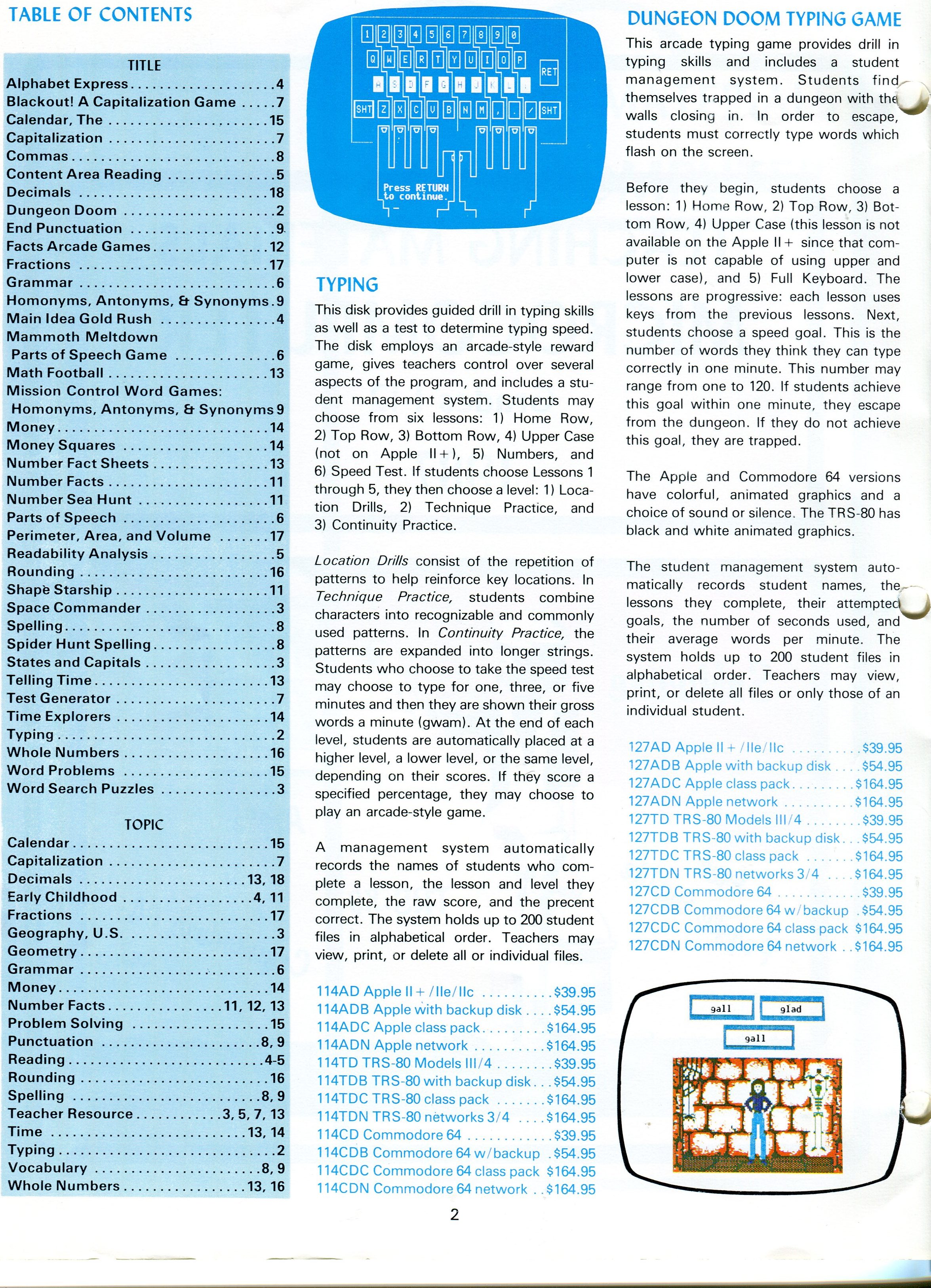
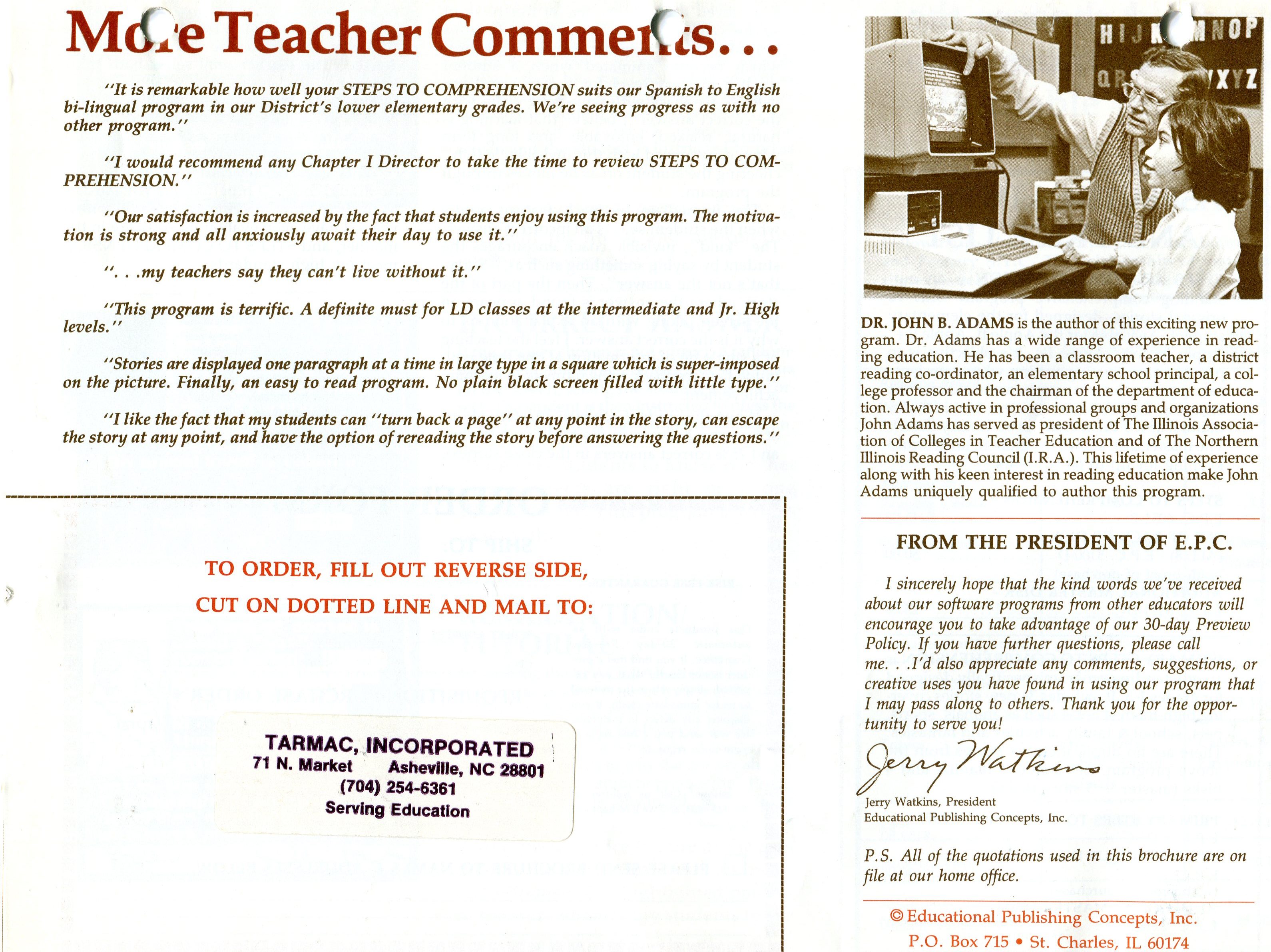
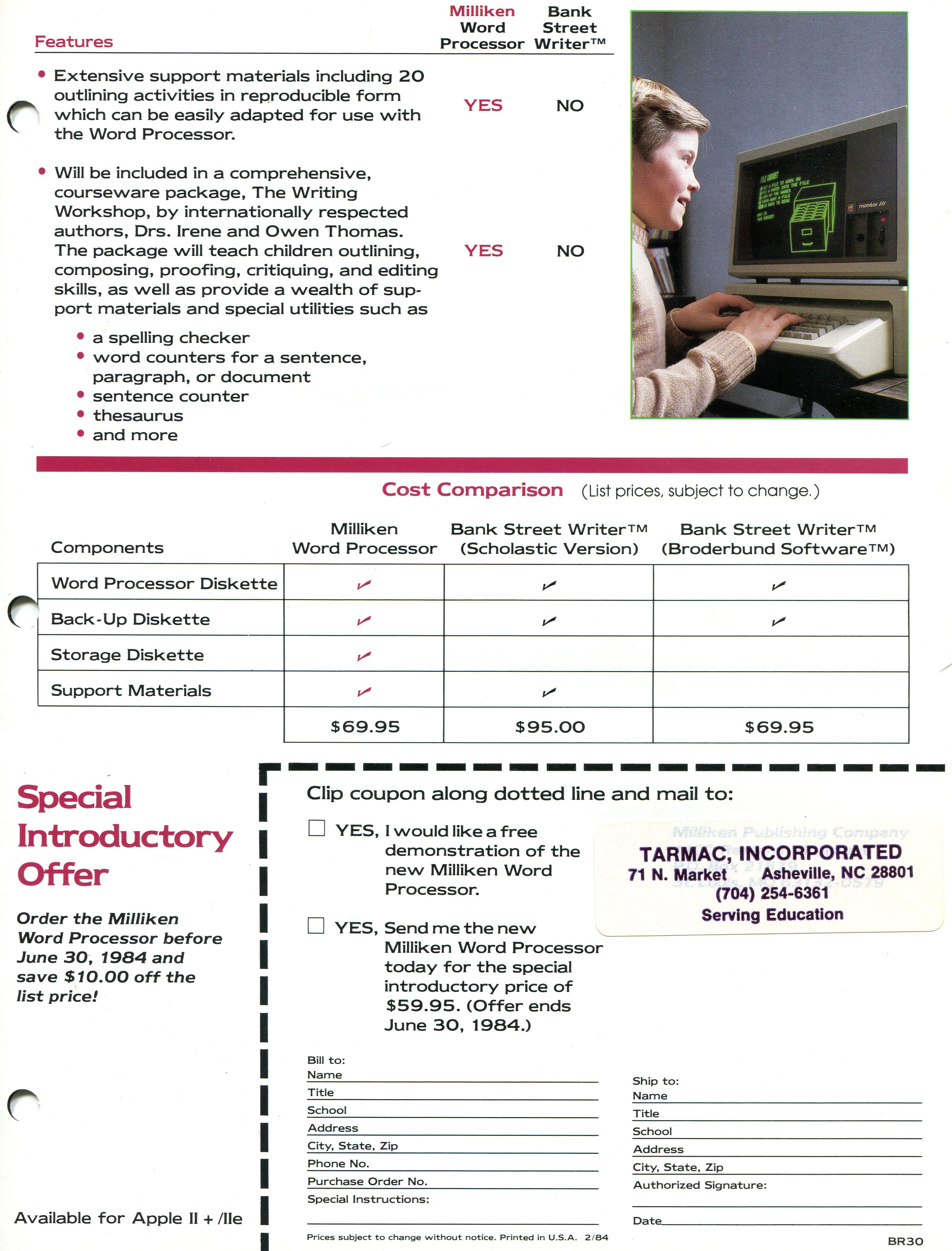
Many scans date from 1984 through 1990, when educational software catalogs, Apple II and MS-DOS materials, and publisher catalogs became central to school technology purchasing.


Reading Programs and Inventories
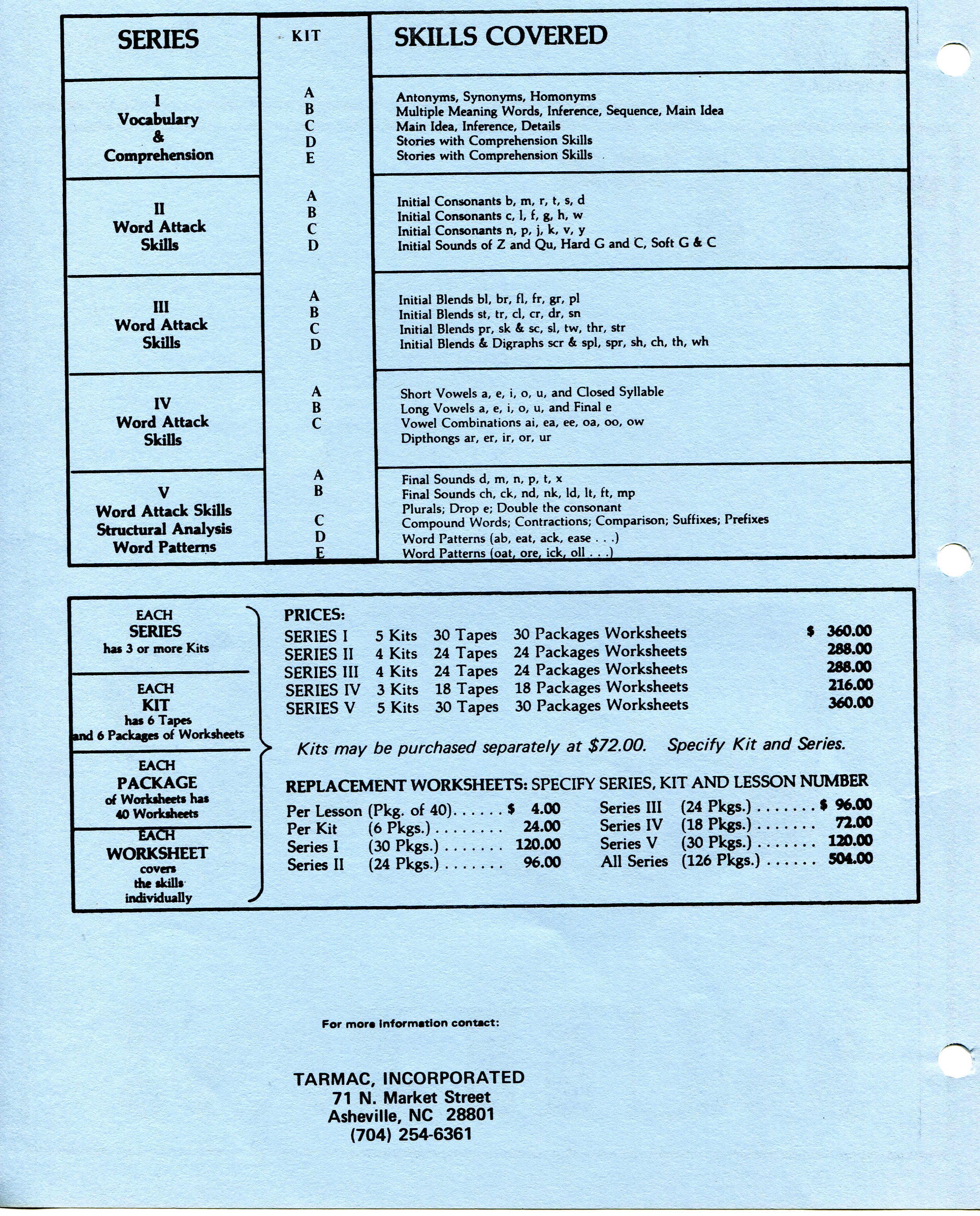
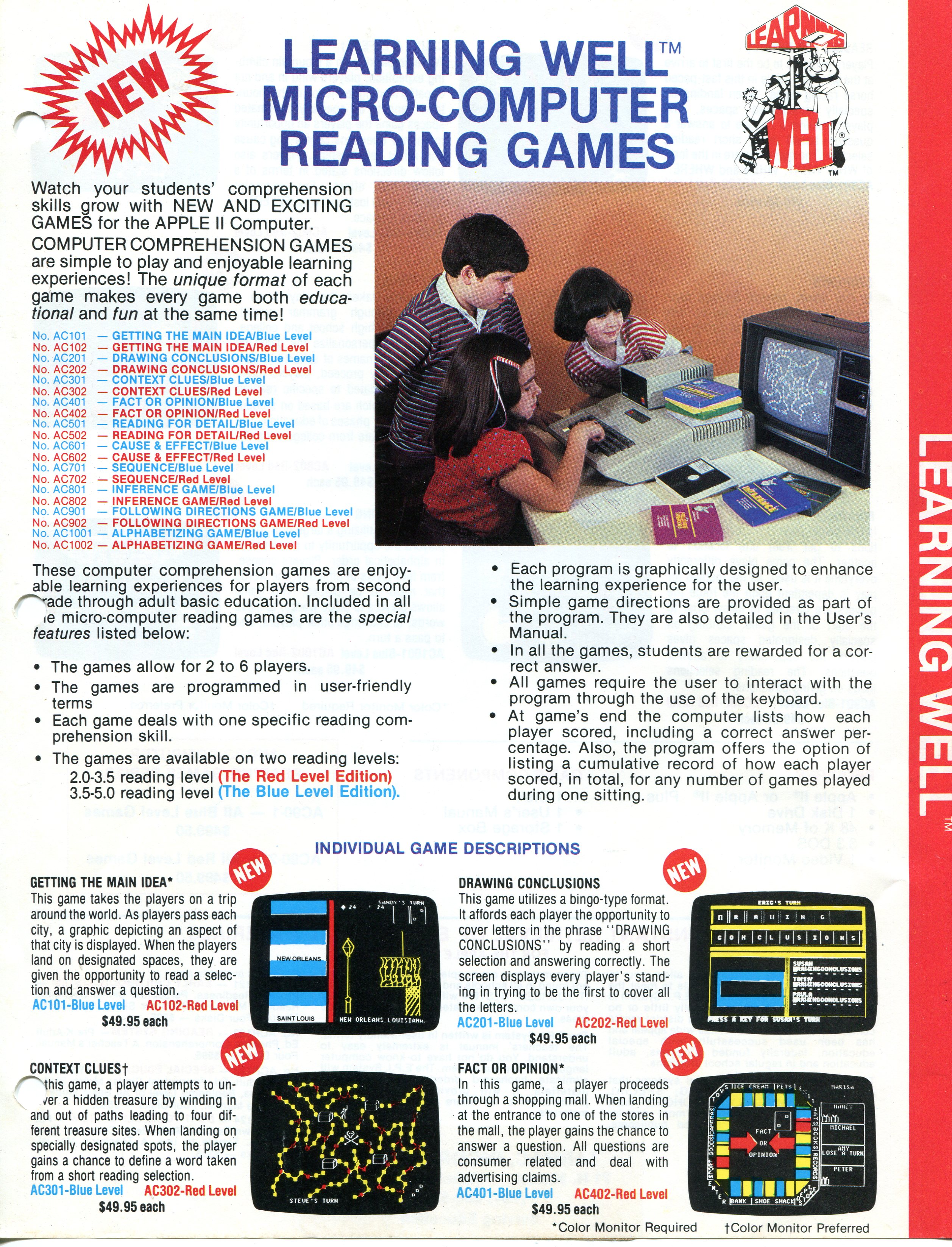
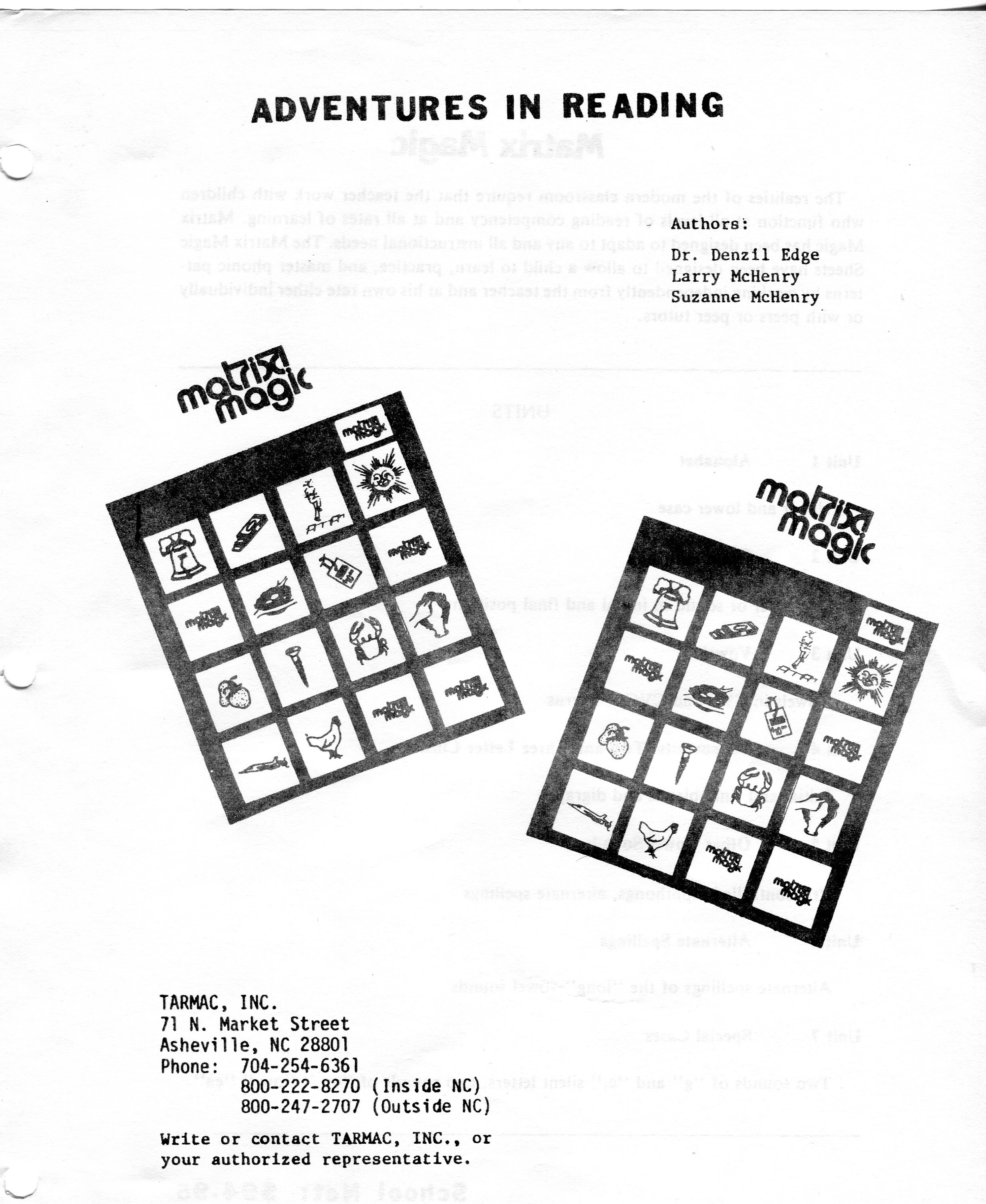
Reading instruction was a major part of Tarmac's work. These pages include reading inventories, reading games, skill materials, and program flyers from the 1980s and 1990s.






Math, Writing, and Daily Living Programs
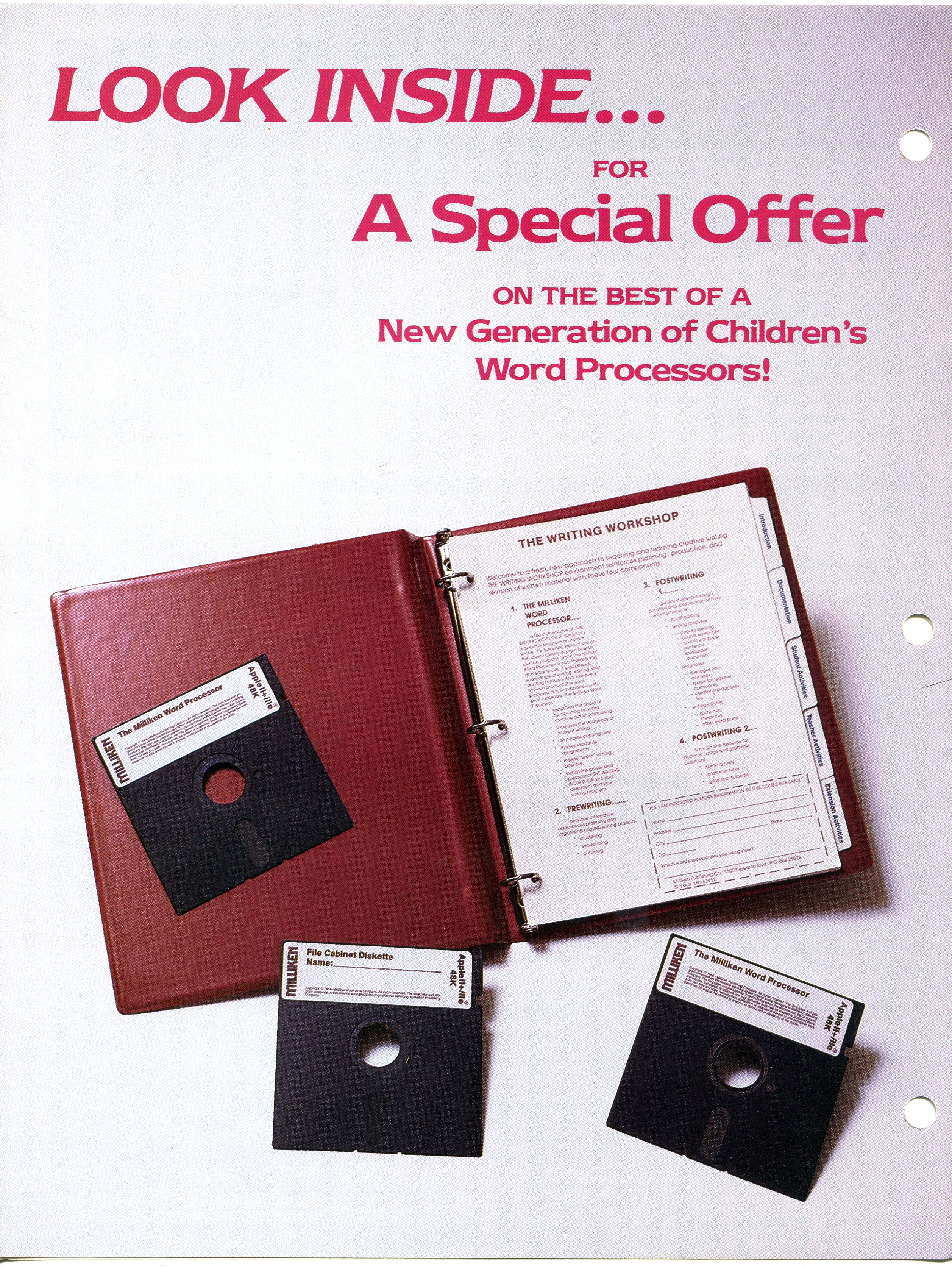
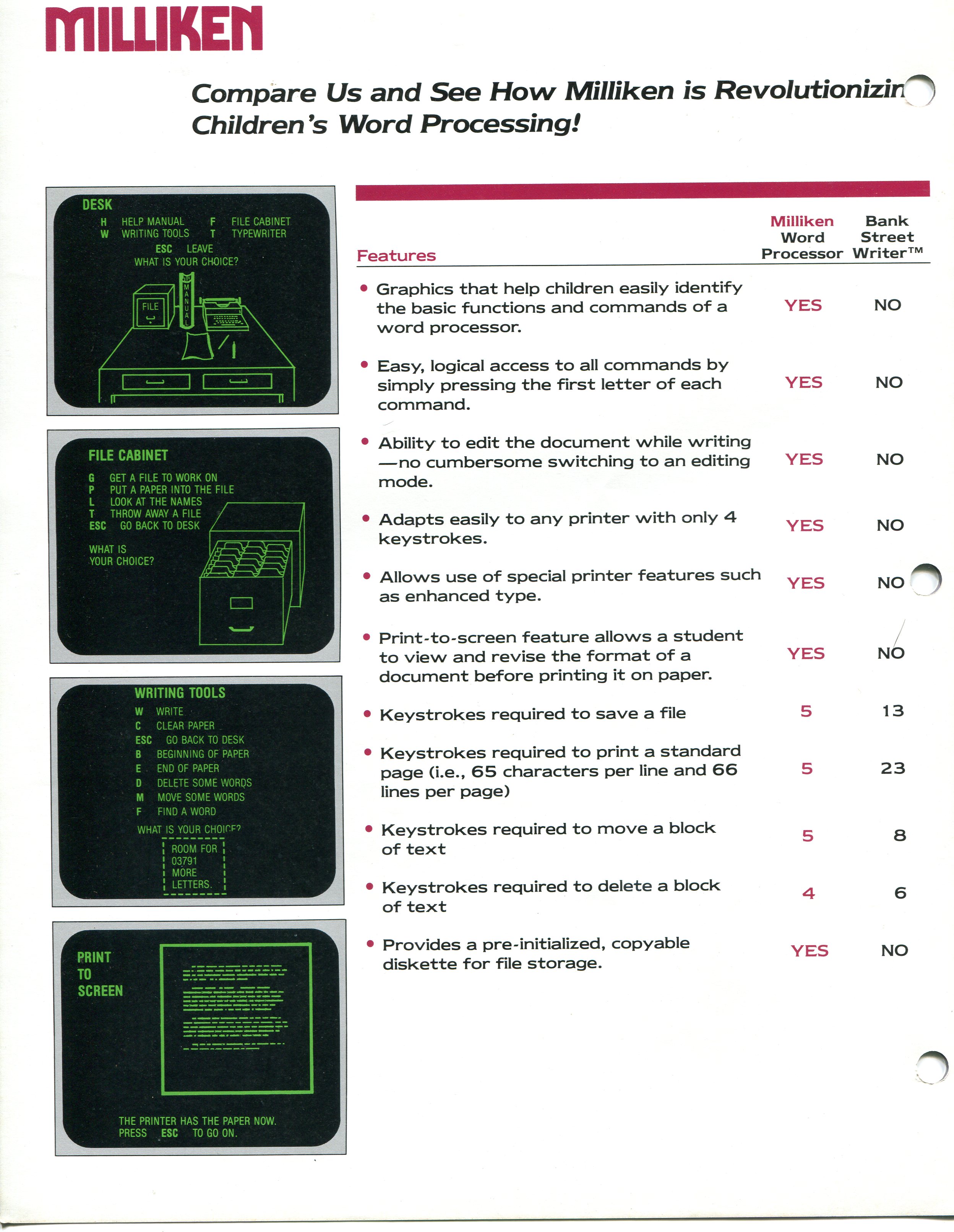
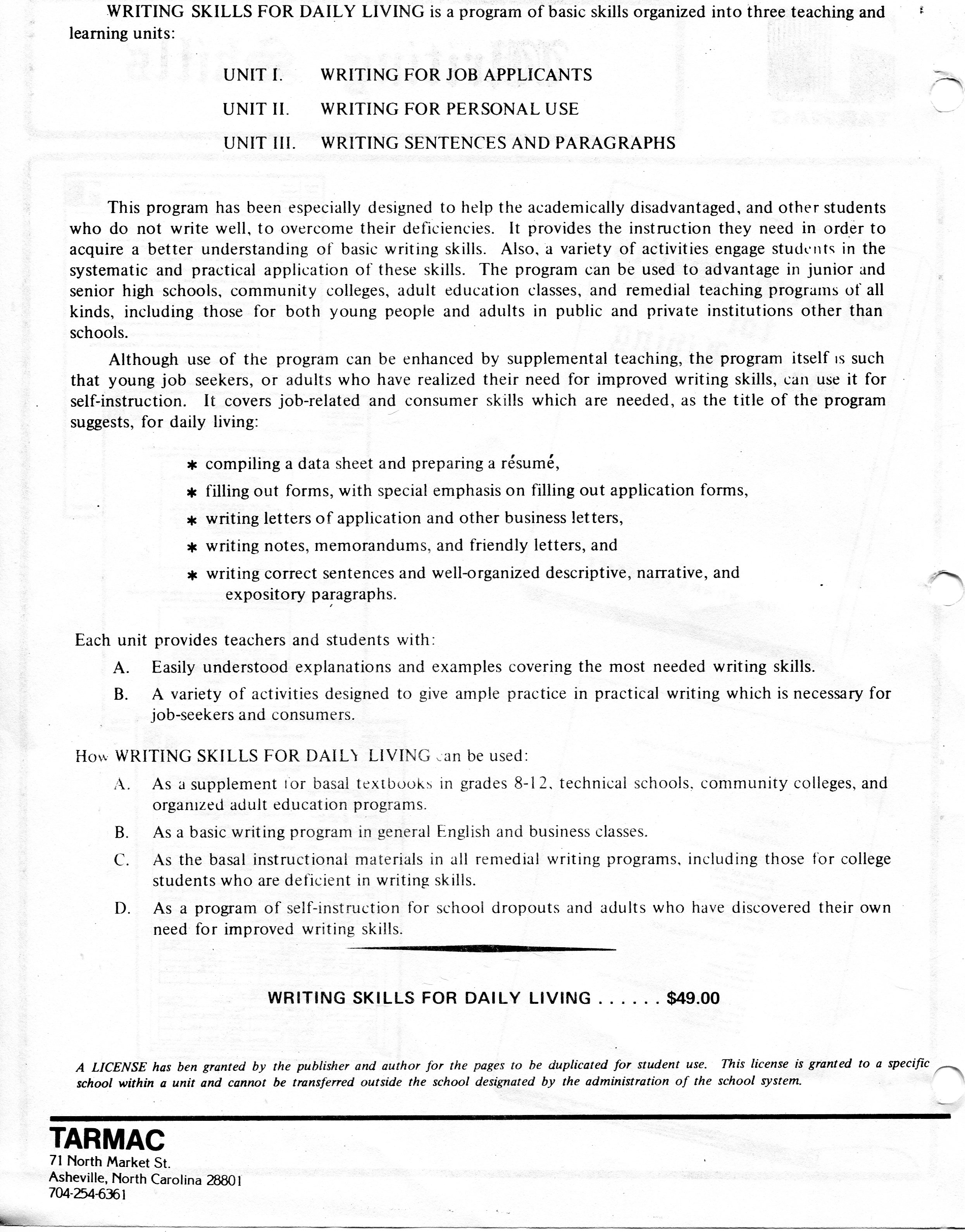
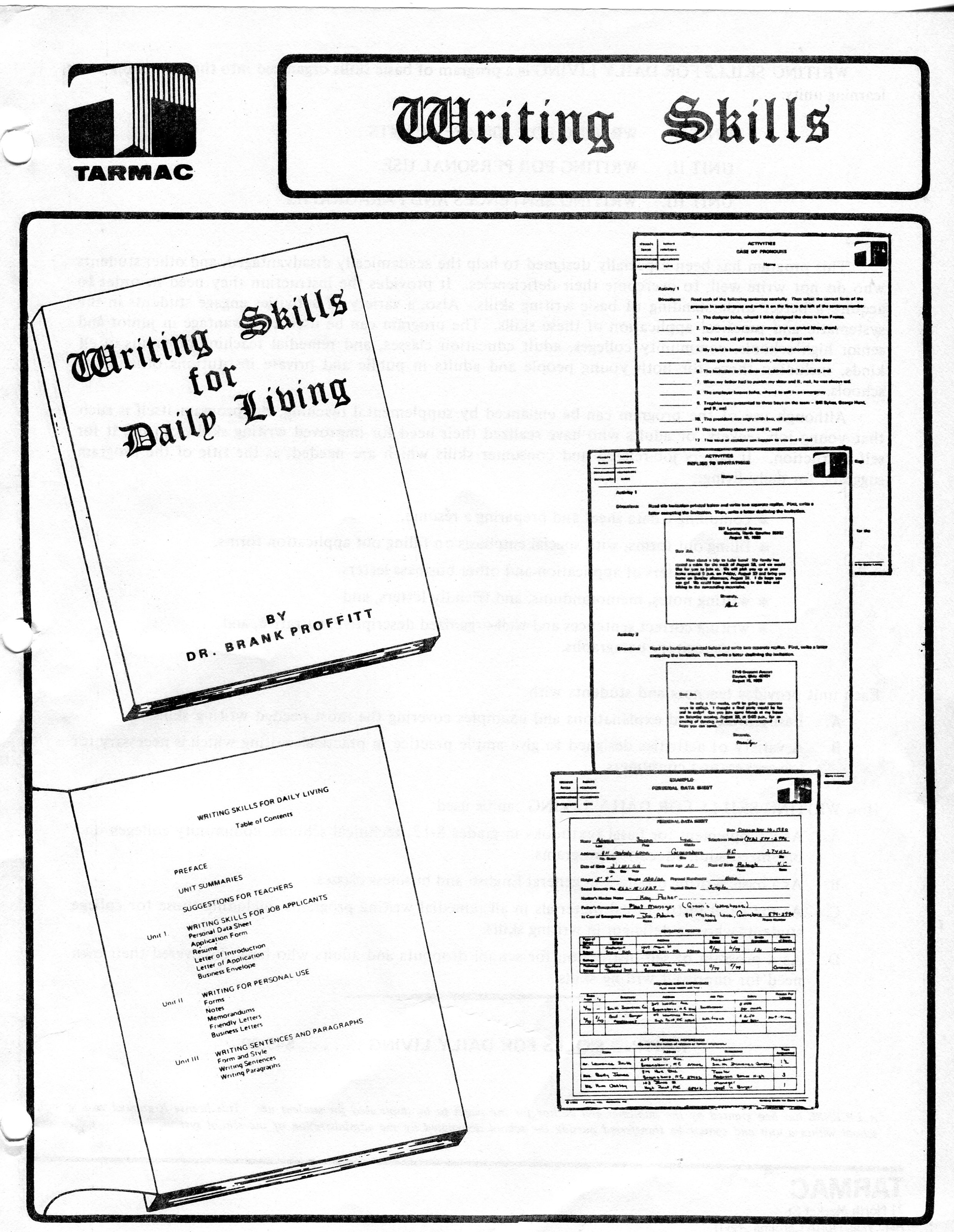
These materials focus on practical academic skills, including mathematics, writing, forms, job applications, daily living skills, and classroom support programs.
Edufun and Other Software Materials
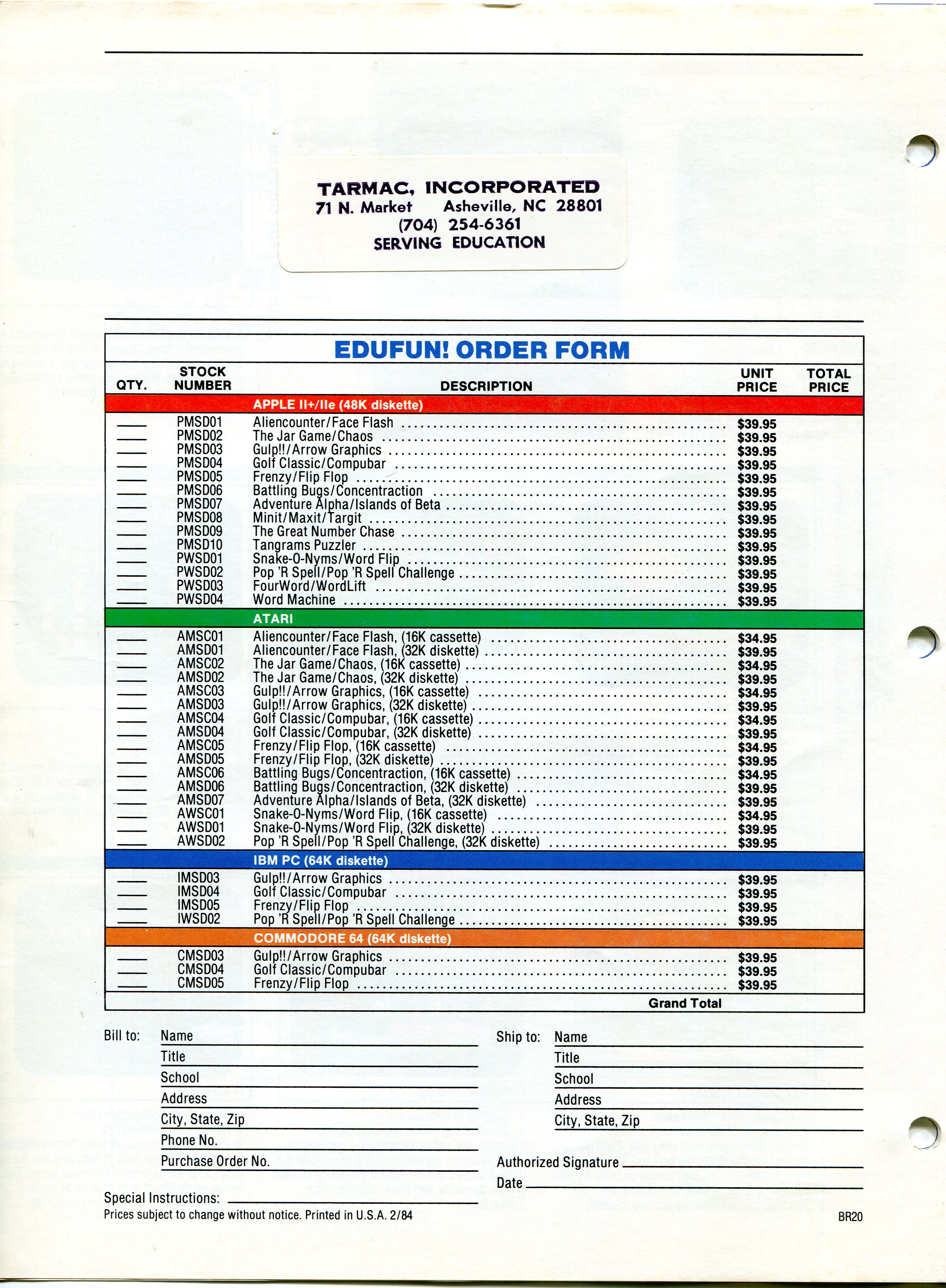
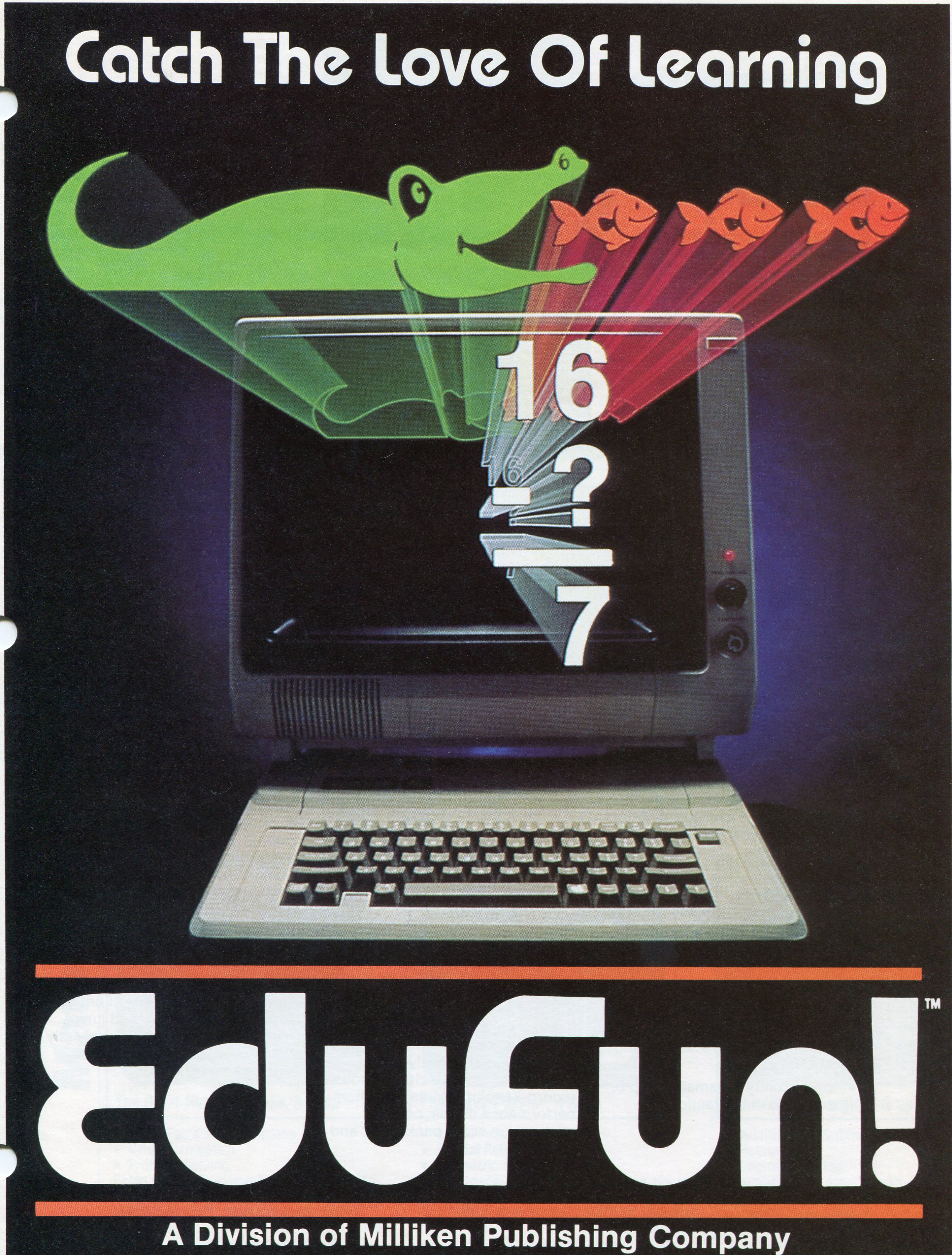
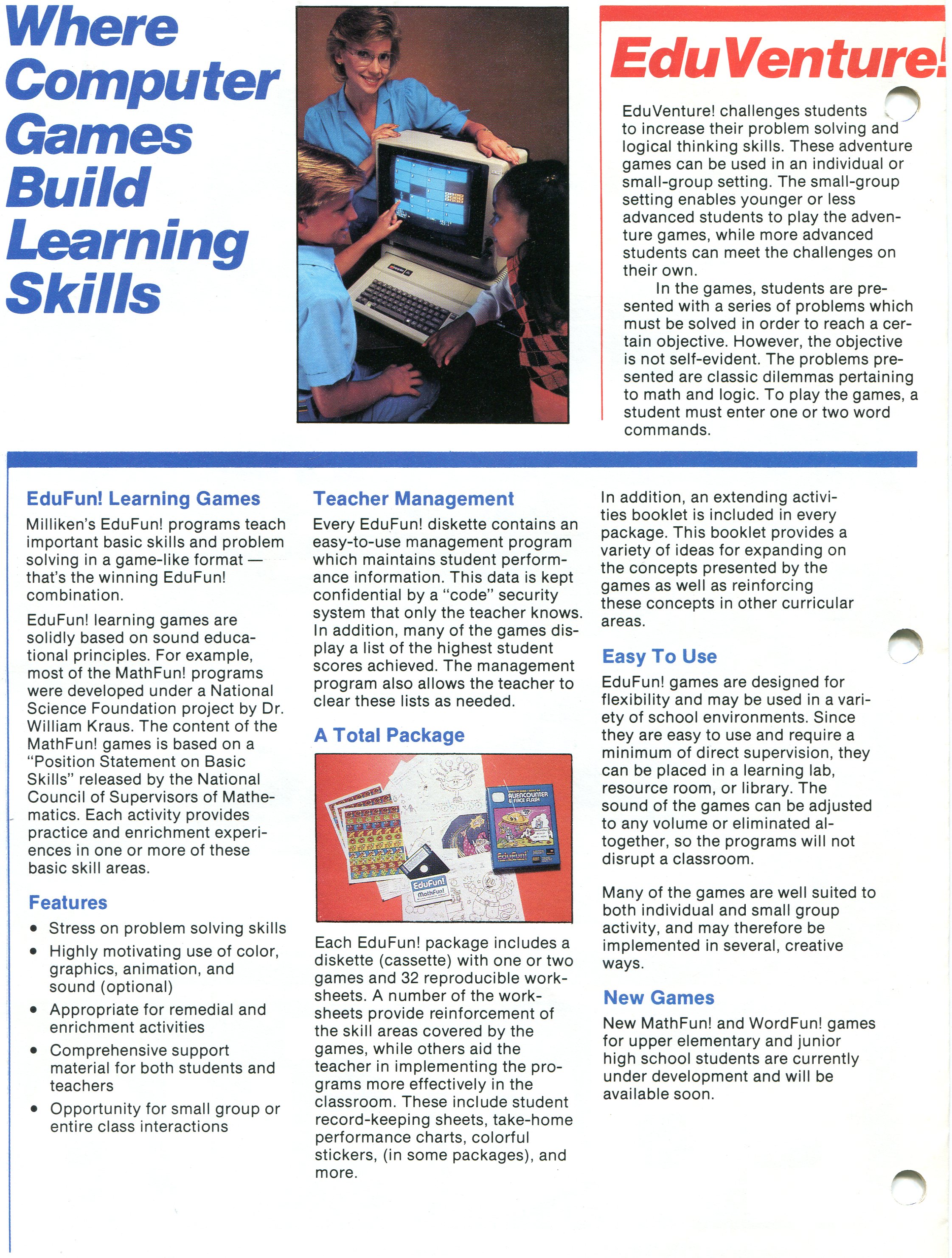
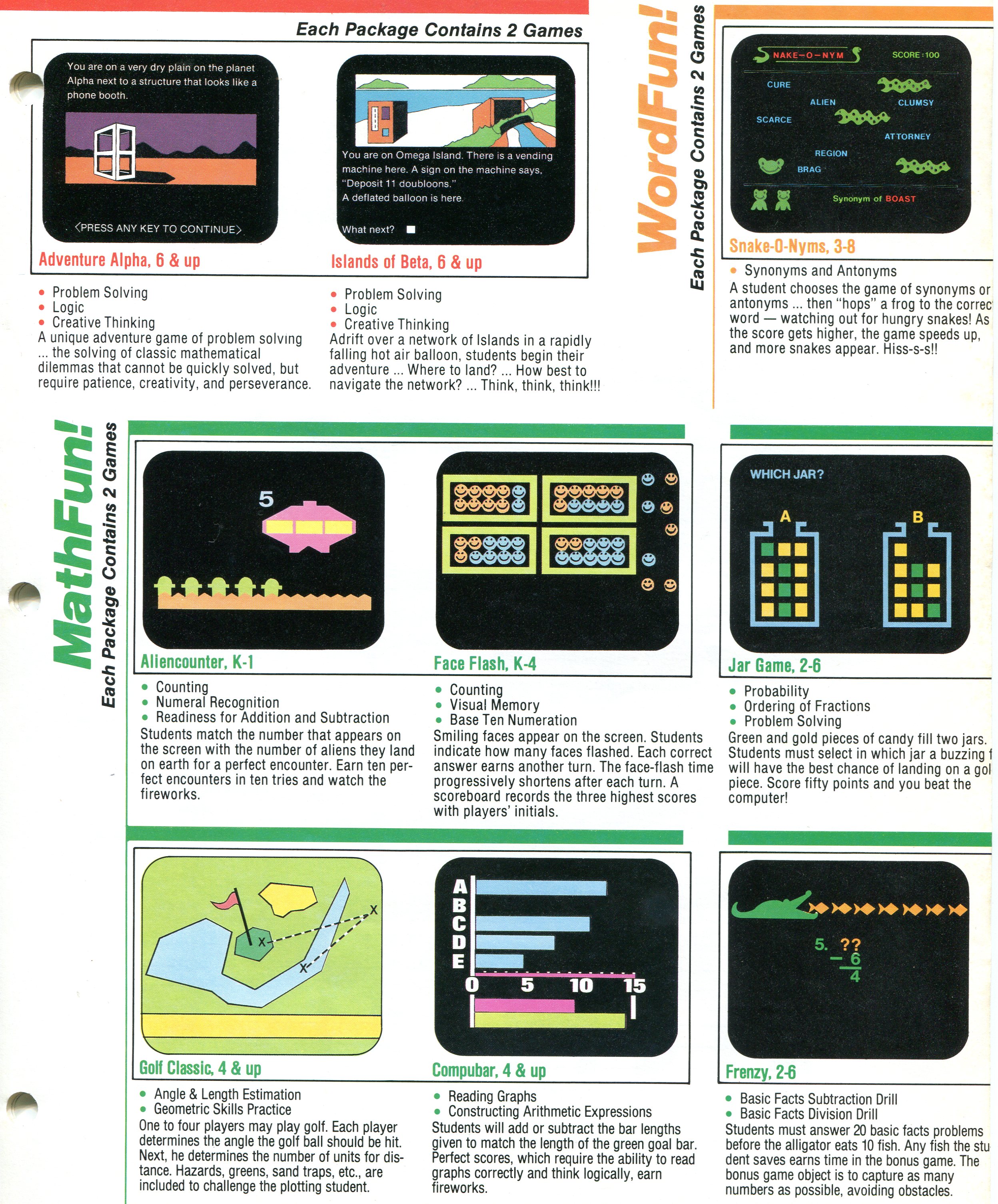
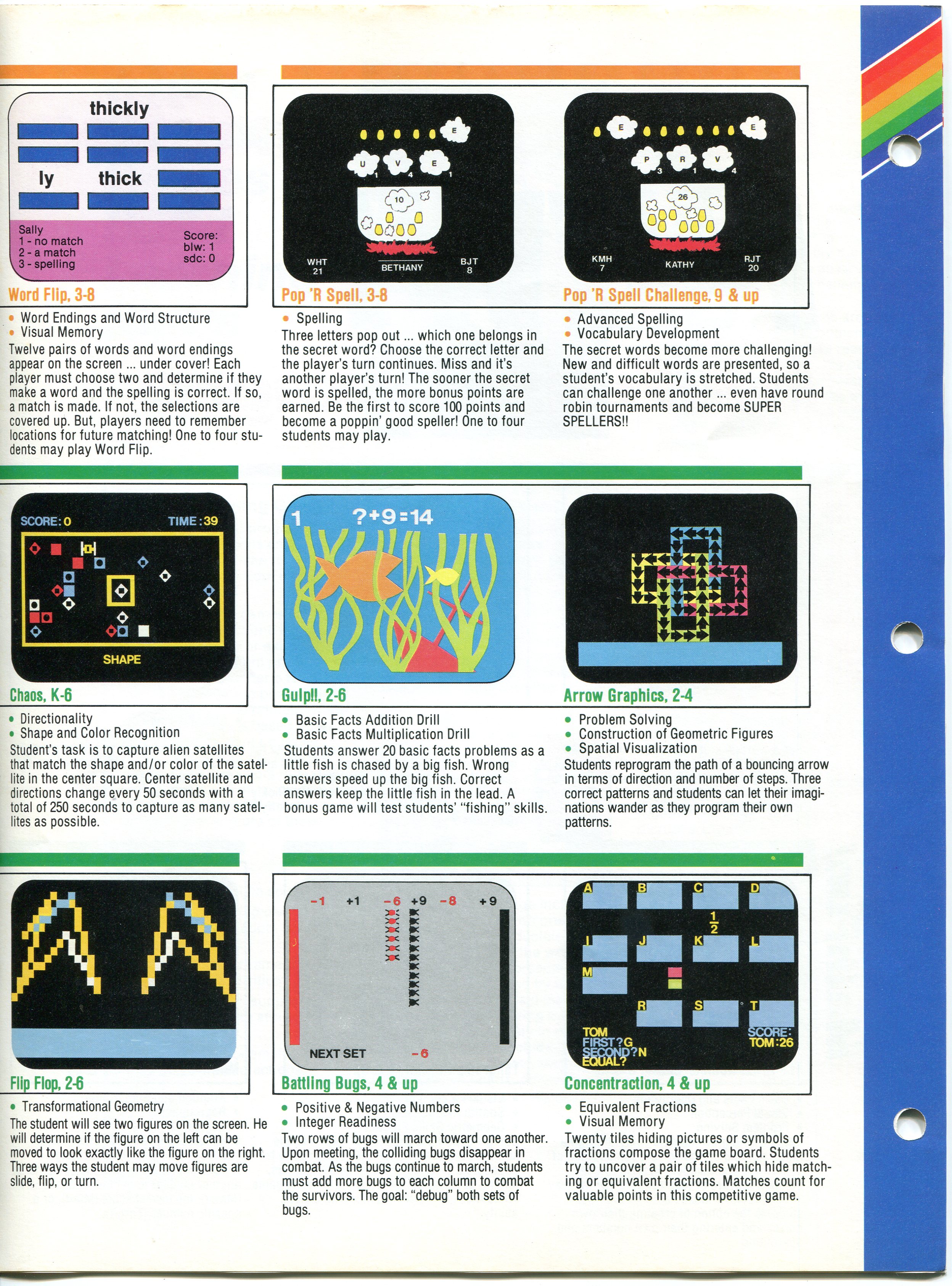
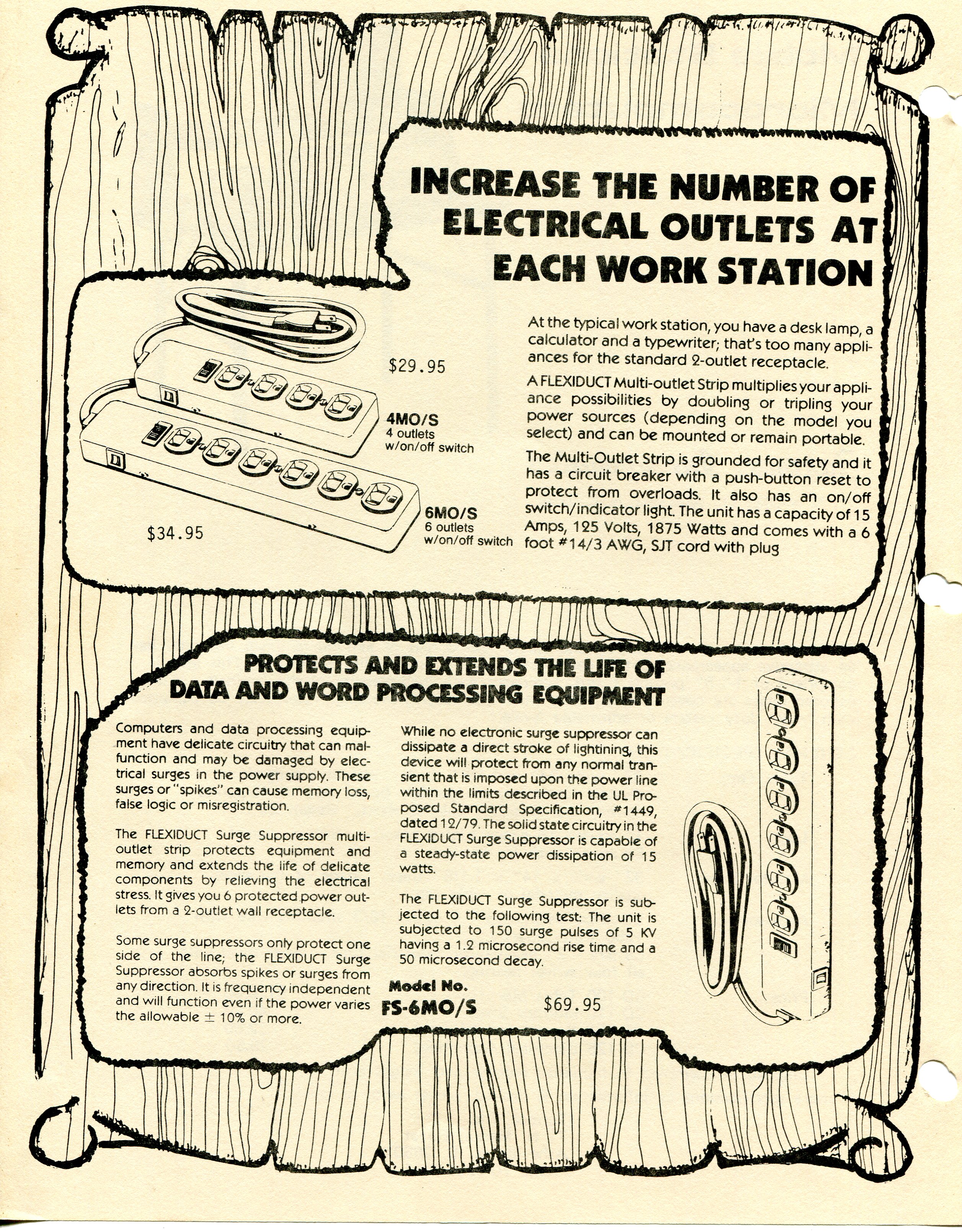
This group preserves software order forms, program pages, power supply references, and educational game materials from the microcomputer era.

Reading Plus, Testimonials, and Partners
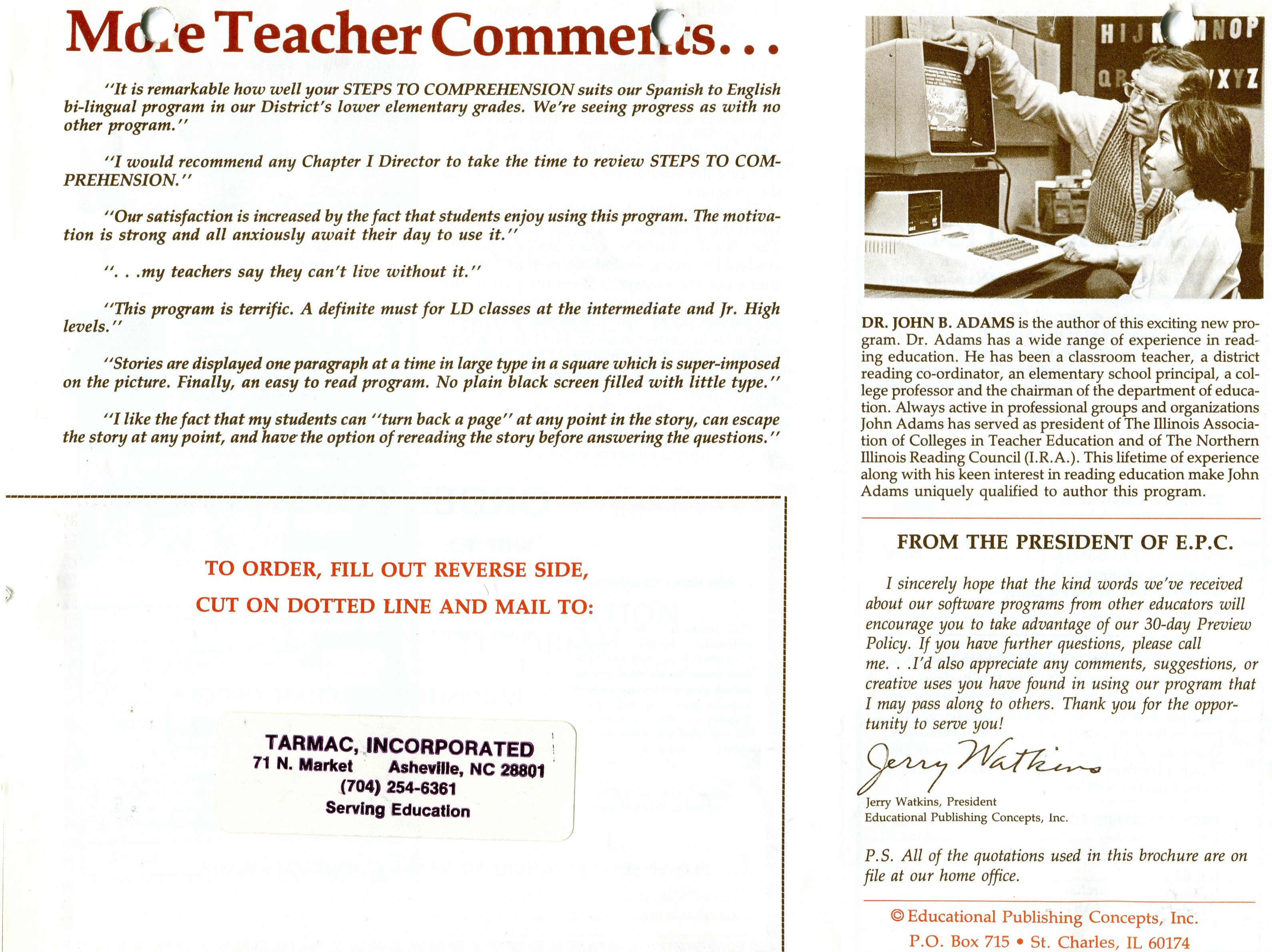
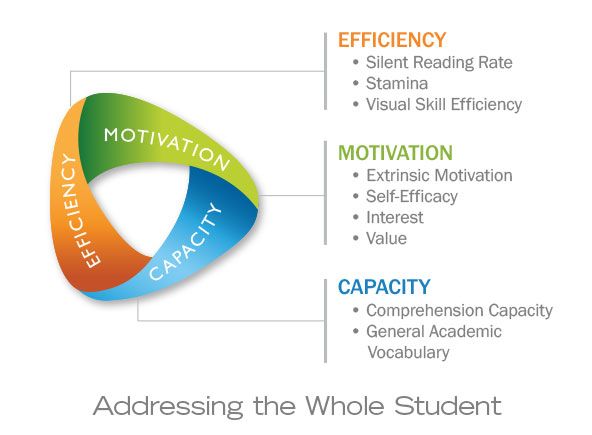
Later materials include Reading Plus graphics, school testimonials, and partner or association images connected to Tarmac's educational technology work.



Miscellaneous Preserved Media
A few images in the media library appear to be supporting graphics, utility screenshots, or unrelated preserved files. They are included here so the archive remains complete.